Edo-Tokyo Open Air Architectural Museum Tickets
from $191 private guided museum tour, not an admission ticket
Check Price & Availability →Opens the official listing with live dates and prices. Book there; nothing is charged on this site.
- Area
- Koganei Park, Koganei
- Theme
- History & samurai
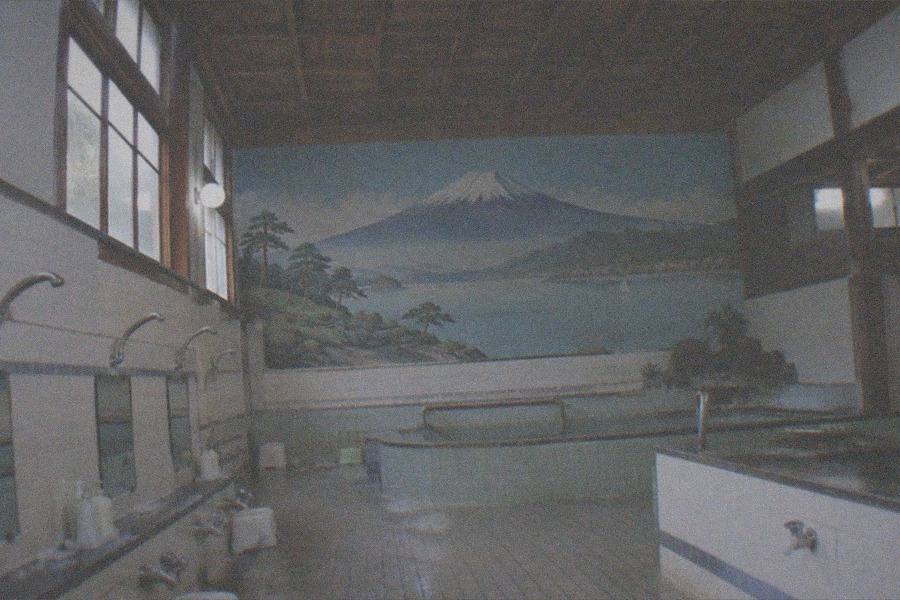
A bathhouse with a soaring tiled roof, a sento that once anchored a whole neighbourhood, a family farmhouse with thatched eaves, a photography studio fronted in weathered wood: at the Edo-Tokyo Open Air Architectural Museum the exhibits are buildings, and you walk into them. The museum sits inside Koganei Park in western Tokyo, where more than two dozen structures rescued from demolition have been reassembled along outdoor paths. Some hold period interiors, some hold displays, and one is a working cafe in a relocated farmhouse. It is the sister site of the Edo-Tokyo Museum in Ryogoku, and where that museum tells the city's story with objects, this one lets you stand inside it. Admission is 400 JPY, there is no timed entry, and the visit is a half day.
How Much Do Tickets Cost At The Edo-Tokyo Open Air Architectural Museum?
A general adult ticket costs 400 JPY at the reception counter, with concessions of 200 JPY for anyone 65 or over, 320 JPY for university students, 200 JPY for high school students, and free entry for junior high school students and younger. There is no timed entry and no separate special-exhibition charge.
That single 400 JPY ticket covers everything inside the gates: the permanent zone of restored buildings, any special exhibition running in one of the structures, and the interiors open to walk through. The museum does not split its ticket the way the big Ueno nationals do, which is part of why the Grutto Pass works so well here, since the pass covers both the permanent and special exhibitions at this site.
| Ticket | Price |
|---|---|
| General adult | 400 JPY |
| 65 and over | 200 JPY |
| University students | 320 JPY |
| High school students | 200 JPY |
| Junior high school students and younger | Free |
| 1 October, Tokyo Citizens' Day | Free for everyone |
| Silver Day, third Wednesday of the month | Free for visitors 65 and over |
| Family Day, third Saturday and the following Sunday | Half price for a Tokyo-resident guardian accompanying a child under 18 |
Two monthly rules are live and worth planning around. Silver Day, the third Wednesday of every month, is free for anyone 65 or over. Family Day, the third Saturday and the Sunday that follows, is half price for a guardian accompanying a child under 18, provided that guardian is a Tokyo resident, a condition stated on the museum's Japanese admission page. Both rules appear on the museum's own English and Japanese admission pages with no suspension notice, so do not believe any guide telling you they have been paused. The museum's own site carries the current admission details at tatemonoen.jp.
By Tokyo standards this is one of the cheapest substantial museum visits in the city. Only the Fukagawa Edo Museum and the Sumida Hokusai Museum match it at 400 JPY among the museums this site covers, and neither of those is a half-day outdoor park. If you are touring Tokyo's history museums cheaply, pair this with the Edo-Tokyo Museum in Ryogoku, which reopened on 31 March 2026 after a roughly four-year renovation and charges 800 JPY for its permanent exhibition.
How Far Ahead Do You Have To Book?
This museum can be walked into: there is no timed entry and no advance-only rule. You either buy a date-specified online advance ticket or simply pay at the reception counter on the day. A sold-out slot is not a thing here; the only reason to arrive early is a weekend or public holiday crowd.
That puts the museum in the same walk-in category as the Tokyo National Museum or the Hakone Open-Air Museum, and firmly outside the stressful end of Tokyo ticketing. There is no monthly release to catch, no 10:00 JST scramble, no named ticket printed with the buyer's identity. You show up, you pay, you enter. The online advance ticket exists for anyone who likes having the day settled before leaving the hotel, and it is date-specified, so only buy it once your plans are firm.
What a sold-out slot means elsewhere is worth understanding, because it explains why this museum is a good fallback. The Ghibli Museum in Mitaka, a few stations further west on the same JR Chuo Line, sells advance-only tickets through Lawson Ticket on a monthly release, first come, and a missed release means no visit. The teamLab Borderless digital art museum in Azabudai Hills runs timed slots that fill up on busy days. None of that applies in Koganei. If your Ghibli morning falls through, this museum is the natural same-line consolation: it is open, cheap, and needs nothing booked.
The one planning rule that matters is the calendar, not the ticket. The museum closes on Mondays, or the following day when Monday is a national holiday, and it also shuts over the year-end and New Year period. Arrive at least an hour before closing to see anything meaningful, since last admission is 30 minutes before the gate shuts and the site is spread out enough that a rushed final hour is a frustrating one.
Families should note the Family Day rule in the booking calculus. If your visit happens to fall on the third Saturday of a month or the Sunday after it, a Tokyo-resident guardian accompanying a child under 18 pays half price at the counter, no booking needed. Foreign visitors resident in Tokyo qualify on the same terms as anyone else living in the city.
A different, pricier option exists for visitors who want a guide rather than a ticket: a private 3-hour guided tour of the grounds, run separately from the museum's own counter and costing many times the 400 JPY door admission because it buys a guide and a fixed itinerary, not entry. The self-guided walk-in above remains the cheaper, simpler route for most visitors.
More advice for planning this museum visit →
What Are The Opening Hours And How Do You Get There?
Hours run 09:30 to 17:30 from April to September and 09:30 to 16:30 from October to March, with last admission 30 minutes before closing. The museum closes on Mondays, or the following day when Monday is a national holiday, and over the year-end and New Year period. It sits inside Koganei Park in Koganei, western Tokyo.
| At a glance | Detail |
|---|---|
| Hours, April to September | 09:30-17:30, last admission 30 minutes before closing |
| Hours, October to March | 09:30-16:30, last admission 30 minutes before closing |
| Closed day | Monday, or the following day when Monday is a national holiday; also closed over the year-end and New Year period |
| Area | Koganei Park, Koganei, Tokyo |
| How far ahead to book | Walk in; optional date-specified online advance ticket |
| How long to allow | Half a day |
Getting there is a two-stage journey and the stage that catches people out is the second one. From Shinjuku, take the JR Chuo Line to Musashi-Koganei, leave by the north exit, and catch a Seibu bus roughly five minutes to the Koganei-koen Nishiguchi stop, followed by a five-minute walk into the park. The alternative is Higashi-Koganei station's north exit and the CoCo community bus to Tatemonoen-iriguchi, then about ten minutes on foot. The whole trip from Shinjuku runs about 50 to 70 minutes each way, with a return fare roughly in the 700 to 1,100 JPY range; the JR segment is covered by a Japan Rail Pass, the bus is not.
Because the museum is a park rather than a building, allow a half day and dress for the weather. The paths between structures are outdoors, and in winter the October-to-March closing time of 16:30 means the light is already fading over the last hour. Summer visitors get the longer 17:30 closing and shade along the tree-lined lanes, but should still carry water, since the walking between houses adds up.
Sequencing a visit works best west-to-east or east-to-west along the museum's own zone layout: pick up the map at reception, do the western zone of farmhouses and rural buildings first while your legs are fresh, then finish in the eastern zone near the entrance, where the bathhouse and the commercial buildings sit closest to the gate. The on-site cafe occupies a relocated farmhouse and is a sensible mid-point stop rather than a destination.
What Do You Actually See At The Edo-Tokyo Open Air Architectural Museum?
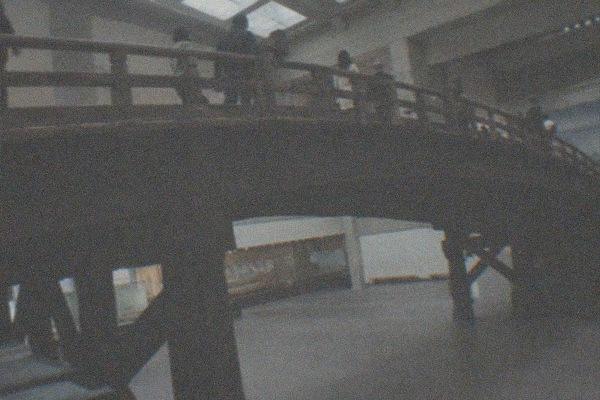
The museum is a spread of restored buildings moved here from around Tokyo and set out along outdoor paths, so you walk between them through the park. Interiors are open to enter, and the whole visit is an outdoors-to-indoors rhythm, which makes it a half-day outing rather than a quick stop.
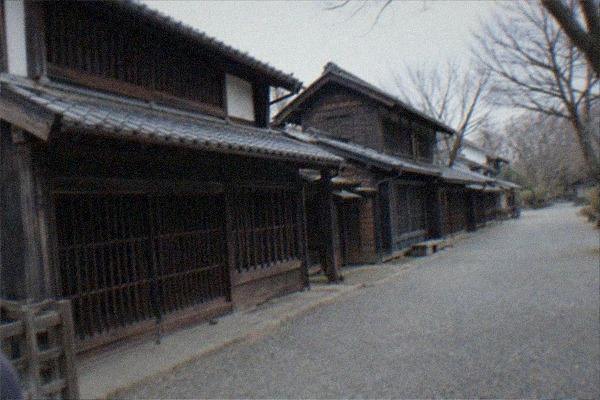
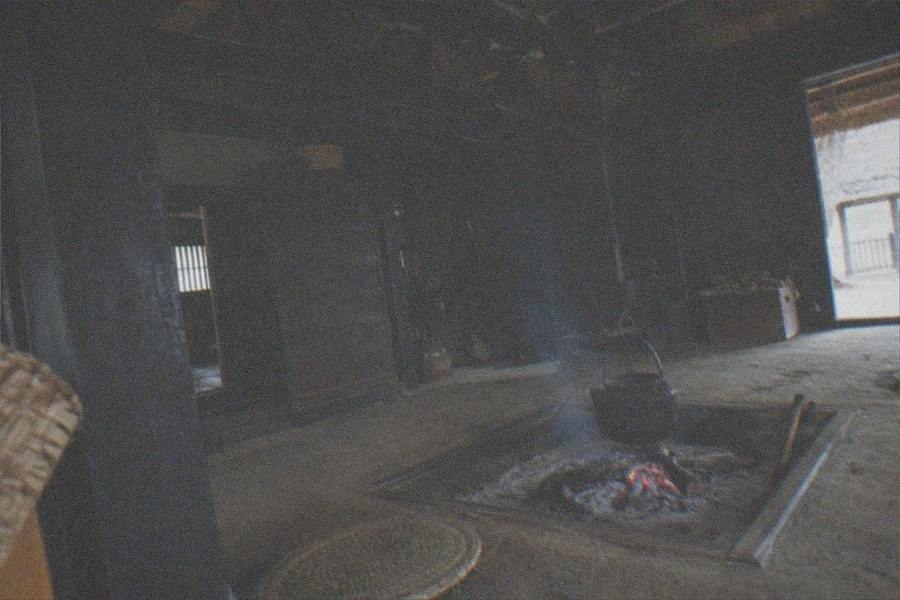
The collection is the city's built fabric itself. A neighbourhood bathhouse stands with its grand tiled roof intact. Farmhouses from Tokyo's rural western outskirts sit with thatched roofs and dark timber interiors. A photography studio, a flower shop, a miso store and a grocery all line the reconstructed street of the eastern zone, their ground floors dressed as they would have looked in daily use. Unlike a conventional museum, nothing here is behind glass at street level: the point of relocating these structures was to keep them standing and walkable.
Who it suits is easy to state. Anyone with even a passing interest in architecture, old Tokyo, or Studio Ghibli's countryside imagery will get their money's worth several times over from a 400 JPY ticket. Families do well because children can move between houses rather than stand still, and junior high school age and younger enter free. Who it does not suit: anyone who cannot manage unpaved park paths, or a visitor with only two spare hours in central Tokyo, since the round trip alone eats most of that.
The pairing that works best is the Edo-Tokyo Museum in Ryogoku, which covers the same city's history through scale models and artefacts rather than through buildings you can enter. Do one or the other in a single day, not both, since they are at opposite ends of the city. If it is history you are after in central Tokyo instead, the Samurai Ninja Museum Tokyo in Asakusa offers armour try-on and guided tours on a timed-slot basis, a different register of history entirely.
Photographers should aim for the first hour after opening or the last before closing, when the low sun hits the street of shopfronts and the crowds are thinnest. The museum permits photography inside most structures, though always check the signage at each entrance, since individual buildings set their own rules.
Is The Grutto Pass Worth It Here?
The Grutto Pass gives free entry here on both the permanent and special exhibitions, the best value on the pass for this lineup against a 400 JPY door price. The pass excludes both teamLabs, the Ghibli Museum, Warner Bros. Studio Tour and Sanrio Puroland, so it cannot cover any of Tokyo's timed-slot headliners.
The pass costs 2,500 JPY and is valid for two months from first use, sold as a physical card or a digital QR ticket at participating facilities, online, or via an exchange ticket at major convenience stores. Full details are on the official pass site at rekibun.or.jp/grutto. Most facilities on the pass give either free entry or a discount, and which one you get differs by venue. Here you get free entry, and uniquely you get it on both the permanent and special exhibitions, which no other lineup museum matches this completely.
In the pass's own break-even arithmetic, this museum's 400 JPY counts as one of the free-entry venues that repay the 2,500 JPY price. Five free-entry venues together total 2,730 JPY, clearing the pass with 230 JPY to spare, and this museum is one of them. The catch the arithmetic carries: one of the six free-entry venues, Miraikan in Odaiba, is closed entirely from 1 October 2026 to 22 April 2027 for refurbishment, reopening 23 April 2027, so for a pass bought today the realistic set is five venues totalling exactly the pass price.
The exclusions matter just as much as the inclusions. The pass covers none of the four venues that dominate most Tokyo itineraries: neither teamLab, nor the Ghibli Museum, nor the Warner Bros. Studio Tour Tokyo in Nerima, nor Sanrio Puroland in Tama. All four run their own dated, capacity-managed ticketing, and there is no pass shortcut to any of them. If your trip is built around those, the Grutto Pass is a side bet on the cheaper civic museums, not a headline purchase.
Where the pass does earn its price is a history-themed week: this museum plus the Edo-Tokyo Museum, the Sumida Hokusai Museum and the Fukagawa Edo Museum are all free-entry listings, and a west-and-east split across two days clears the pass on its own terms. One use per facility, so a repeat visit to Koganei pays the 400 JPY door price again.
What Is Currently Closed Or Changed At The Museum?
Individual restored buildings are closed for repair work under a notice dated 25 August 2026, so a specific house may be shut on any given day while the museum itself stays open. Ignore any claim that the whole site is temporarily closed: the museum is operating, and its stale banner saying otherwise is legacy text.
The repair situation is normal for an open-air site. These are old wooden and plastered structures standing outdoors year-round, and the museum rotates them through maintenance, closing one house at a time rather than shutting the park. Check the notice board at reception on arrival for that day's list, and if one particular building is your reason for coming, it is worth checking the museum's own site at tatemonoen.jp before you travel out.
The bigger correction the internet needs is about the museum's status. Its own holiday page still displays a COVID-era banner reading as though the museum were temporarily closed, and that banner is wrong. The museum never shut for the pandemic era in the way that banner implies, and it is open now. Do not let a search result or an out-of-date guide talk you out of the trip.
The same correction applies to its sister museum. The Edo-Tokyo Museum in Ryogoku reopened on 31 March 2026 after roughly four years of renovation, and many published guides still describe it as closed. Both halves of the city's Edo-Tokyo story are currently visitable, which was not true for most of the past four years.
Two calendar items to finish with. The museum closes over the year-end and New Year period every year, so a late-December visit needs the current dates off the museum's own site. And when a Monday is a national holiday, the museum opens that Monday and closes the following weekday instead, which is how the Golden Week period shifts its closed days around. Plan around those two rules and the rest of the visit is as simple as Tokyo museum-going gets.
Questions People Ask
How much does the Edo-Tokyo Open Air Architectural Museum cost?
A general adult ticket is 400 JPY. Anyone 65 or over pays 200 JPY, university students 320 JPY, high school students 200 JPY, and junior high school students and younger enter free. The single ticket covers both the permanent buildings and any special exhibition running on site.
Do you need to book tickets in advance?
No. The museum is walk-in, with no timed entry. You can either buy a date-specified online advance ticket or simply pay at the reception counter on the day. Slots do not sell out here, so the only reason to arrive early is weekend or holiday crowds.
When is the museum free?
Entry is free for everyone on 1 October, Tokyo Citizens' Day. Silver Day, the third Wednesday of every month, is free for visitors 65 and over. Family Day, the third Saturday and the following Sunday, is half price for a Tokyo-resident guardian accompanying a child under 18. All these rules are live.
Is the museum actually open or temporarily closed?
It is open and operating. Individual restored buildings are closed for repair work under a notice dated 25 August 2026, one at a time, while the museum as a whole stays open. A stale COVID-era banner on one of the museum's own pages reads as a closure notice, but the museum is running normally.
What are the opening hours?
From April to September the museum runs 09:30 to 17:30, and from October to March it runs 09:30 to 16:30. Last admission is 30 minutes before closing in both seasons. It closes on Mondays, or the following day when Monday is a national holiday, plus the year-end and New Year period.
Does the Grutto Pass work here?
Yes, and it is the best value on the pass for this site lineup: free entry on both the permanent and special exhibitions. The pass excludes both teamLabs, the Ghibli Museum, Warner Bros. Studio Tour and Sanrio Puroland, so it cannot cover Tokyo's timed-slot headliners.
How do you get to the museum?
Take the JR Chuo Line to Musashi-Koganei, north exit, then a Seibu bus about five minutes to Koganei-koen Nishiguchi and a five-minute walk. Alternatively, from Higashi-Koganei north exit take the CoCo community bus to Tatemonoen-iriguchi, then about ten minutes on foot. Allow about 50 to 70 minutes each way from Shinjuku.
How long should a visit take?
Allow a half day. The buildings are spread along outdoor paths through Koganei Park, so the visit is a walking circuit between structures rather than a single gallery. Arrive at least an hour before closing, since last admission is 30 minutes before the gate and a rushed final hour cuts out whole zones.
Other History Museums Worth A Look