Tokyo Metropolitan Art Museum
General admission is free, no ticket needed.
Free visitor info →Separate paid option
from $14.89 special-exhibition ticket, not general admission (the building itself is free)
Check Price & Availability →This paid option is separate from the free general admission above. Opens the official listing with live dates and prices; nothing is charged on this site.
- General admission
- Free
- Area
- Ueno Park, Taito
The Tokyo Metropolitan Art Museum, known across the city as Tobikan, stands inside Ueno Park at 8-36 Ueno-Park, Taito, a seven-minute walk from JR Ueno's Park Gate. Walking in costs nothing. The lobby, the shop and the restaurants are open to anyone, and the building hosts a constant rotation of publicly submitted art-society exhibitions, many of which charge nothing at all. The catch sits one step further in: the headline shows, the special and thematic exhibitions that draw the crowds, are each ticketed on their own terms, and the fee changes with every programme.
How Much Does Tokyo Metropolitan Art Museum Cost?
Entering the Tokyo Metropolitan Art Museum is free, but that buys architecture and public spaces, not art. Every special or thematic exhibition is ticketed on its own and the fee differs by exhibition, so there is no single adult admission price to quote.
The museum's own English wording is plain: 'Museum entry is free. Exhibition admission fees vary by exhibition.' That sentence is the whole pricing story. The free layer covers the building itself: the lobby, the museum shop, the restaurants, and those art-society public-entry exhibitions that charge nothing. It does not cover a ticketed special or thematic exhibition, which is what most visitors are actually coming to see. The shape of the deal is identical to The National Art Center, Tokyo in Roppongi, another free-to-enter building where every show is priced on its own.
Because each exhibition sets its own fee, concessions are set per exhibition too, not by the museum. There is no standing student rate or senior rate to print. The museum's own FAQ notes that some family-discount tickets are sold only at its own ticket counter, not online, so a family planning around a discount should check at the counter rather than assume the online price is the only one. The current exhibition list and each show's fee are on the museum's own visitor guide page.
| What | Price |
|---|---|
| General admission to the building | Free |
| Special or thematic exhibition | Set per exhibition, check the museum's own site |
| Art-society public-entry exhibitions | Many free, some charge, per exhibition |
| Concessions | Set per exhibition, not by the museum |
| Family-discount tickets | Some sold only at the museum's own ticket counter |
One warning worth repeating: never arrive assuming a specific yen figure. A guide that quotes one flat admission price for this museum is quoting a price for one temporary exhibition that has already ended. The honest answer is that the number moves with the programme, and the museum's own site carries the current figure for each running show.
More advice for planning this museum visit →
Do You Need To Book Tokyo Metropolitan Art Museum Tickets In Advance?
No. The Tokyo Metropolitan Art Museum is a walk-in venue: you turn up and buy at the museum's own ticket counter, or through whichever online seller is running the exhibition you want. There is no timed-entry system and no advance-only rule. A sold-out slot here means one popular exhibition is full, not the whole museum.
This matters more than it sounds, because Tokyo splits sharply on booking. The teamLab venues and the Ghibli Museum cannot be bought at the door at all, and several others run timed slots. Tobikan sits on the easy side of that line. There is no reservation to miss, no release date to watch, and no membership to register. The channels are the museum's own ticket counter plus per-exhibition online sellers, and door sales are a normal part of how the venue operates.
What a sold-out situation looks like here is narrower than at a timed-entry venue. If a blockbuster exhibition fills its capacity for the day, the ticket counter stops selling that show, but the building stays open, the free public-entry exhibitions stay viewable, and the shop and restaurants carry on. A visitor who missed the headline show can still use the visit. For a popular exhibition on a weekend or a holiday, buying through the exhibition's online seller ahead of the day removes the risk entirely, and the museum's own site links each show to its correct seller.
The practical advice is therefore simple. For a quiet weekday, walk in. For a named blockbuster on a busy day, buy the specific exhibition ticket online first, then walk in. There is no scenario where you need a slot weeks in advance, and no scenario where the museum itself turns away someone who has not pre-booked the building.
One exhibition currently has a bookable ticket ahead of time: the museum's 100th-anniversary show Edo in Focus, pairing its own collection with loans from the British Museum, runs through 18 October 2026 and can be booked in advance rather than queued for at the counter. Book it only if your visit falls before that date; after the show closes, check the museum's current exhibition list instead, since the building's own free entry never changes.
More advice for planning this museum visit →
When Is Tokyo Metropolitan Art Museum Open And Closed?
The museum is open 09:30 to 17:30, and until 20:00 on a Friday while a special or thematic exhibition is running, with last admission at 17:00 normally and 19:30 on a late Friday. The closing rule has two parts: the museum as a whole closes the 1st and 3rd Mondays, while the special and thematic exhibitions close every Monday.
That two-part rule is the detail most guides flatten and get wrong. The building, meaning the lobby, shop, restaurants and free public-entry exhibitions, shuts on the 1st and 3rd Mondays of a month. The ticketed special and thematic exhibitions shut every Monday without exception. So on a 2nd or 4th Monday you can enter the building and see whatever is free inside, but every paid exhibition is dark. On a 1st or 3rd Monday nothing is open at all. Never plan a Monday visit around the paid shows here.
When a closure Monday is a national holiday, the closure moves to the following weekday instead. Beyond the weekly rhythm, the museum posts maintenance closures: 9 to 16 July 2026, 21 to 28 December 2026 and 12 January 2027, plus a New Year closure from 29 December 2026 to 3 January 2027. Anyone visiting across those windows should confirm on the museum's own guide page before travelling.
| What | Detail |
|---|---|
| Hours | 09:30-17:30; Fridays 09:30-20:00 while a special or thematic exhibition is running |
| Last admission | 17:00 normally, 19:30 on a late Friday |
| Closed | 1st and 3rd Mondays for the museum as a whole; the special and thematic exhibitions close every Monday |
| Area | Ueno Park, Taito |
| How far ahead to book | Walk in; buy a blockbuster exhibition ticket online only for busy days |
| How long to allow | Depends on the exhibitions you choose; check the museum's own site |
The Friday extension is worth building a trip around. On a late Friday the building runs to 20:00 while a special or thematic exhibition is on, with last admission at 19:30, which makes this one of the few Ueno art venues usable after a full working day.
What Does The Grutto Pass Cover At Tokyo Metropolitan Art Museum?
The Grutto Pass gives free entry on the 企画展 only, and only for exhibitions running 23 July to 7 October; special exhibitions are excluded outright. That is a narrow slice of what the museum does. The pass also excludes both teamLab venues, the Ghibli Museum, Warner Bros. Studio Tour Tokyo and Sanrio Puroland, among many others.
The pass itself costs 2,500 JPY, covers 107 facilities and runs for two months from first use, with a hard expiry of 31 March 2027. It is not a free-entry card everywhere: each facility on it is either a free entry or a discount, and the split differs facility by facility. At Tobikan the free-entry scope is the 企画展, and only for exhibitions running between 23 July and 7 October. The special exhibitions, which are the shows most visitors travel for, are excluded outright. Anyone buying the pass primarily for this museum should read that scope carefully on the official Grutto Pass site first.
The exclusion list is long and matters for anyone building a Tokyo itinerary around the pass. It excludes teamLab Borderless and teamLab Planets TOKYO, the Ghibli Museum, Warner Bros. Studio Tour Tokyo, Sanrio Puroland, the National Art Center, Nezu, Artizon, Meiji Jingu, the Railway Museum, Hakone Open-Air, SMALL WORLDS, the Unko Museum, Madame Tussauds, Tokyo Trick Art, both Yokohama museums, Edo Wonderland, and special exhibitions at most facilities. No other genuine multi-museum pass for Tokyo is on sale, and Go City does not operate a Tokyo product.
Where the pass does earn its price is the free-entry venues elsewhere in the lineup, and the honest arithmetic is strict: the five free entries that count toward it total exactly the pass price, so the free entries alone only break even if you use all five. What makes the pass worthwhile is the discounts and the breadth on top, not the free-entry maths.
How Do You Get To Tokyo Metropolitan Art Museum?
The museum sits at 8-36 Ueno Park, Taito, a seven-minute walk from JR Ueno's Park Gate, ten minutes from Ueno on the Ginza or Hibiya lines, and ten from Keisei Ueno. There is no car park and the museum asks visitors not to drive. Ueno Park itself makes the walk part of the visit.
Ueno is one of the best-served transport nodes in Tokyo, which is why the no-driving request costs nothing. The JR Yamanote line, the Ginza and Hibiya metro lines and the Keisei line all land within a ten-minute walk, and the approach through Ueno Park passes trees, fountains and the other museums clustered there. The address to give a taxi or to punch into a map app is 8-36 Ueno-Park, Taito-ku, Tokyo 110-0007.
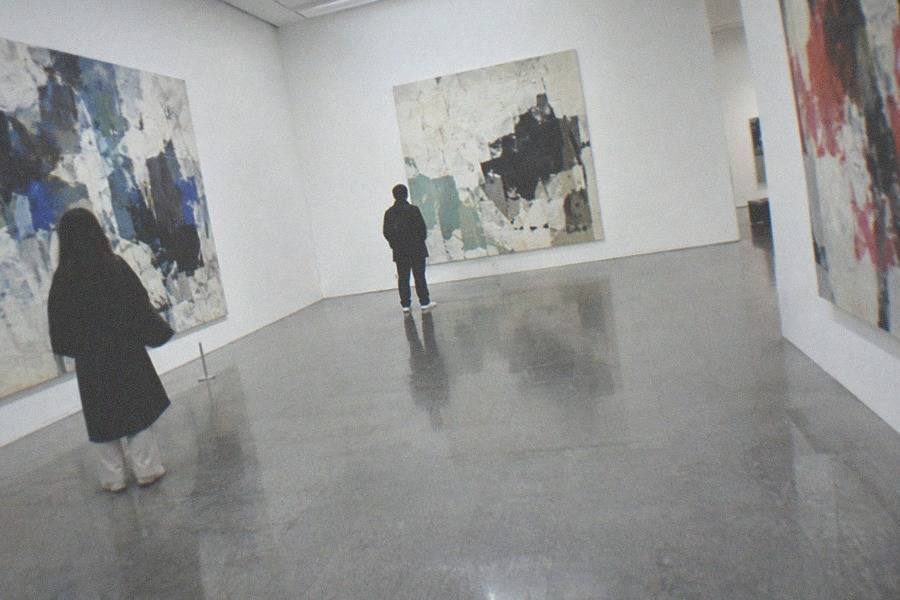
The park setting also shapes the day. The Tokyo National Museum stands a short walk away inside the same park, as do the National Museum of Nature and Science and the National Museum of Western Art, so a single Ueno visit can carry two or three museums if the legs allow. The trade is that everything in the park competes for the same hours: arrive early for the biggest exhibition, then let the rest of the day sprawl.
One planning note for anyone staying in the west of the city: Ueno is on the Yamanote loop, so access from Tokyo Station, Akihabara or Asakusa is direct, and the Keisei connection serves anyone arriving from Narita. The museum's own access details, including the no-car-park policy, are on its visitor guide page.
What Can You Combine With A Visit To Tokyo Metropolitan Art Museum?
The Tokyo National Museum is the obvious pairing, a short walk through the park, though it closes on Mondays, as do the other big Ueno nationals. For a Monday, the National Art Center, Tokyo in Roppongi is open and free to enter in the same way this museum is. The teamLab venues are a different ticketing world.
Inside Ueno Park the pairing is effortless. The Tokyo National Museum charges 1,000 JPY for its collection exhibitions and closes Mondays, so a weekend or a weekday is the window for a two-museum day. The National Museum of Nature and Science and the National Museum of Western Art sit in the same park with the same Monday closure, which is the trap: a visitor who plans a Monday around the big Ueno museums finds all three national institutions shut, and Tobikan's own exhibitions are shut every Monday too.
For a Monday, the answer is Roppongi. The National Art Center, Tokyo opens Mondays, closes Tuesdays instead, and shares this museum's exact pricing shape: free to enter the building, every exhibition ticketed separately. It also carries no permanent collection at all, so the visit there is about the architecture, the library and the shop unless you buy a show.
Visitors whose interest is contemporary and digital art should note that teamLab Borderless and teamLab Planets TOKYO are on no museum pass of any kind and run their own dated, timed, capacity-managed ticketing. Planets in particular cannot be bought at the door at all. Tobikan is the opposite: walk in, buy at the counter, no slot to miss. Keeping the two ticketing worlds straight is half of planning a Tokyo art trip.
A final word on names, because Tokyo has three museums with near-identical Japanese names. This page is about 東京都美術館, the Tobikan in Ueno. The Tokyo Metropolitan Teien Art Museum in Shirokanedai and the Museum of Contemporary Art Tokyo in Kiyosumi are different museums in different parts of the city, with different prices and different closing days, and must never be conflated with this one.
Questions People Ask
Is Tokyo Metropolitan Art Museum free?
Entering the building is free, and that covers the lobby, the shop, the restaurants and those art-society public-entry exhibitions that charge nothing. It does not cover a ticketed special or thematic exhibition. Every paid exhibition is ticketed on its own and the fee differs by exhibition, so there is no single admission price to quote.
Do I need to book tickets in advance?
No. The museum is a walk-in venue with door sales and no timed-entry system. You buy at the museum's own ticket counter or through the online seller running the exhibition you want. For a blockbuster show on a weekend or holiday, buying online first removes the risk of that one exhibition selling out on the day.
What days is Tokyo Metropolitan Art Museum closed?
Two separate rules apply. The museum as a whole closes on the 1st and 3rd Mondays. The special and thematic exhibitions close every Monday. So on a 2nd or 4th Monday the building and its free spaces are open but every paid exhibition is dark. When a closure Monday is a national holiday, the closure moves to the following weekday.
What are the opening hours?
The museum is open 09:30 to 17:30. On Fridays it runs 09:30 to 20:00 while a special or thematic exhibition is running. Last admission is 17:00 normally and 19:30 on a late Friday. There are also maintenance closures on 9 to 16 July 2026, 21 to 28 December 2026 and 12 January 2027, plus a New Year closure from 29 December 2026 to 3 January 2027.
Does the Grutto Pass work here?
Only in a narrow window. The pass gives free entry on the 企画展, and only for exhibitions running 23 July to 7 October. Special exhibitions are excluded outright. The pass also excludes both teamLab venues, the Ghibli Museum, Warner Bros. Studio Tour Tokyo and Sanrio Puroland, among many other facilities.
How do I get there?
The museum is at 8-36 Ueno Park, Taito, a seven-minute walk from JR Ueno's Park Gate, ten minutes from Ueno Station on the Ginza or Hibiya lines, and ten minutes from Keisei Ueno. There is no car park and the museum asks visitors not to drive. Ueno Park makes the approach part of the visit.
Can I visit on a Monday?
Not for the art. The museum as a whole closes on the 1st and 3rd Mondays, and the special and thematic exhibitions close every Monday regardless. For a Monday art visit, the National Art Center, Tokyo in Roppongi is open, closes Tuesdays instead, and is free to enter in the same way this museum is.
Are there concession prices?
Concessions are set per exhibition rather than by the museum, so there is no standing student or senior rate to print. The museum's own FAQ notes that some family-discount tickets are sold only at its own ticket counter, not online, so families should check at the counter rather than assume the online price is the only option.
Other Art Museums Worth A Look