The National Art Center, Tokyo
Free entry, no ticket needed.
Plan your visit →Opens the museum's own visitor page. There is nothing to book: the permanent collection is free.
- Admission
- Free
- Area
- Roppongi, Minato
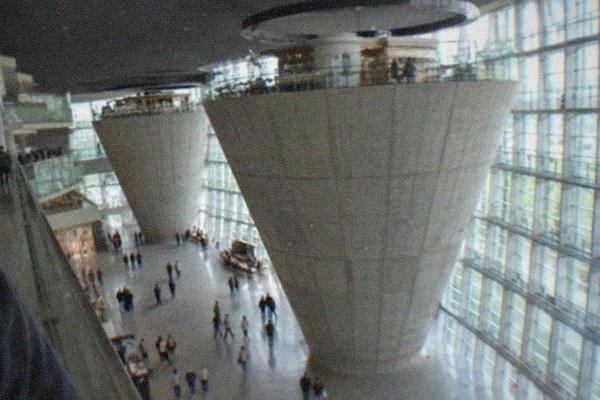
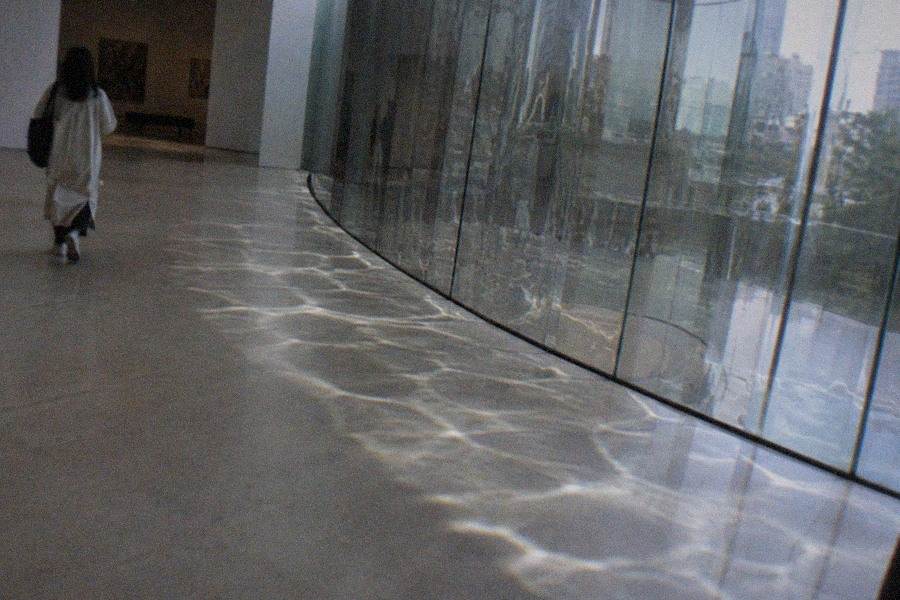
The Kisho Kurokawa glass facade stretches along the pavement in Roppongi, and behind it the atrium opens onto the exhibition wings of The National Art Center, Tokyo. The building was designed as a venue without a collection of its own: its purpose is to host touring exhibitions and artist-association shows, so the calendar changes constantly and no two visits look alike. Walking in costs nothing. Walking into an exhibition does not. That split, a free building and ticketed shows, shapes everything about a visit, from what you pay to which day you choose, because the museum keeps unusual hours: closed on Tuesdays, open on Mondays, and running until 20:00 on Friday and Saturday evenings.
Is The National Art Center, Tokyo Free To Visit?
Entering The National Art Center, Tokyo is free, and the catch is that free buys the building, not the art. There is no permanent collection at all, so every special or artist-association exhibition is ticketed on its own and the fee differs by show. There is no single admission price to quote, only a price per exhibition.
The free part is real and worth having. It covers the Kisho Kurokawa glass facade and the atrium behind it, the art library, the museum shop and the restaurant floor. On a wet afternoon in Roppongi you can walk in off the street, sit in the atrium, browse the shop and read in the library without paying anything. What you cannot do is see a single exhibition, because every gallery in the building sits behind its own ticket counter.
That shape matters when you read other guides. Two museums are free to visit outright, the Sumo Museum and the Meguro Parasitological Museum, and two more let you into the building for nothing but charge for every exhibition, the National Art Center, Tokyo and the Tokyo Metropolitan Art Museum. Calling the National Art Center a free museum without the second half of that sentence sends a visitor in expecting galleries, and there are none that open without a ticket.
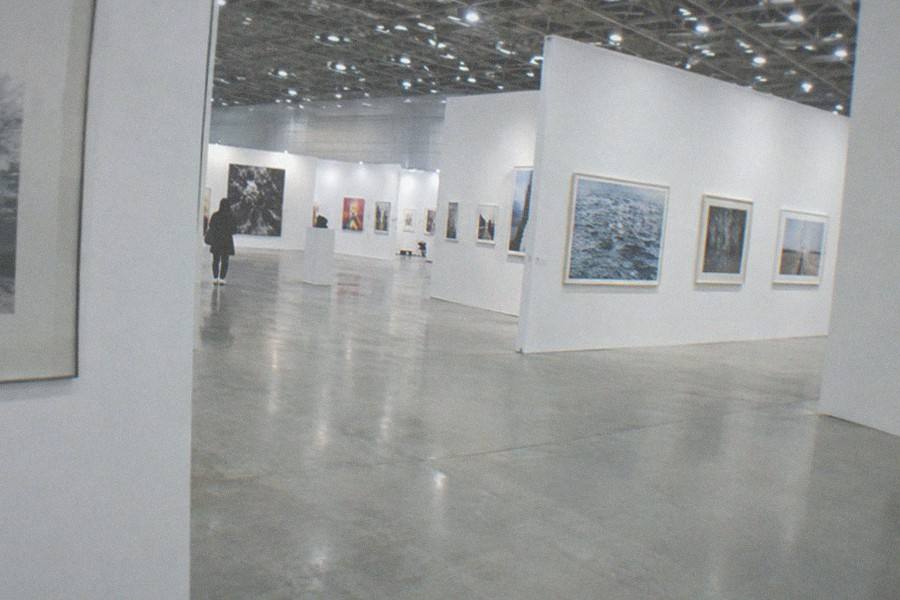
Planning around the split is straightforward. Decide first whether the building is the destination or a show is. If the building is, budget nothing and go on any open day. If a show is, check its dates before anything else, because the programme changes constantly and a show running this month may not be running next month.
| Entering the building | Free |
|---|---|
| Permanent collection | None. The museum has no permanent collection at all |
| Special exhibition ticket | Typically around 2,000 JPY, set per exhibition |
| Artist-association show ticket | From about 1,400 JPY, set per exhibition |
| Where to buy | e-tix or asoview! online; the ticket counter at each exhibition entrance |
| Last admission | 30 minutes before closing |
| Tokyo Museum Grutto Pass | Not covered |
The figures in the table are the museum's own typical bands, not a fixed tariff. What any given show actually charges is set by that show, which is why the honest answer to what it costs is always the question back: which exhibition?
How Much Do Exhibition Tickets Cost?
There is no single exhibition price, because each show sets its own. A special exhibition typically costs around 2,000 JPY, and artist-association shows start from about 1,400 JPY, but both figures move with the programme. The current price for the show you want is on the museum's own site.
Several exhibitions usually run at the same time, and each has its own ticket and its own counter at its own entrance. A touring blockbuster sits at the special-exhibition end of the scale. The artist-association shows, mounted by artists' associations, sit at the lower end. If two people in your group want different shows, they buy different tickets, and there is no combined building pass that covers everything on the calendar.
The one place with every current price is the museum's own information page, which lists each exhibition with its dates and its ticket details: the National Art Center's official site. Check it before you travel rather than after you arrive, because the answer genuinely changes from month to month.
Concessions, where they exist, are set by each exhibition rather than by the building, for the same reason: there is no building-wide ticket to discount. Whatever reduction a show offers is published with that show.
The Tokyo Museum Grutto Pass does not help here. The National Art Center is excluded from the pass outright, and so are both teamLab venues, the Ghibli Museum, Warner Bros. Studio Tour Tokyo, Sanrio Puroland, Nezu, Artizon, Meiji Jingu, the Railway Museum, Hakone Open-Air, SMALL WORLDS, the Unko Museum, Madame Tussauds, Tokyo Trick Art, both Yokohama museums, Edo Wonderland and special exhibitions almost everywhere else. The pass's own facility list at rekibun.or.jp is the authority on what it does cover.
More advice for planning this museum visit →
Do You Need To Book Tickets Ahead?
No booking is needed to enter the building: the National Art Center, Tokyo is a walk-in museum with no timed entry. Exhibition tickets are sold online through e-tix or asoview!, and at a ticket counter at each exhibition entrance. For a blockbuster show, buying online ahead protects you from a same-day sellout at the counter.
This is the easy end of Tokyo's booking spectrum. The hard end looks completely different: teamLab Planets TOKYO sells advance tickets only, with no door sales at all, and teamLab Borderless runs timed slots that are booked ahead. The National Art Center has no slot, no entry time and no capacity gate on the building itself. You arrive, you walk in, and you decide there.
What can still bite you is the exhibition, not the building. A major touring show draws long same-day queues at its counter, and the online allocation for a given day can sell out in advance. Buying through e-tix or asoview! before you leave removes that risk. If you do arrive ticketless on a busy weekend, the evening hours until 20:00 on Fridays and Saturdays give you a later window in which to try.
The two online channels do the same job. e-tix and asoview! both sell advance tickets for the exhibitions currently running, and both deliver a code you show at the exhibition entrance. The on-site counters sell same-day tickets only for their own exhibition, so if you are buying three shows on the spot you will visit three counters.
A sold-out exhibition here never locks you out of the building. The atrium, the library, the shop and the restaurants all stay open on the free side of the ticket counters, so a day that loses the blockbuster is not a wasted trip.
More advice for planning this museum visit →
When Is The National Art Center, Tokyo Open?
The museum opens at 10:00 and closes at 18:00, staying open until 20:00 on Fridays and Saturdays, with last admission 30 minutes before closing. It closes on Tuesdays, and when a national holiday falls on a Tuesday it opens that day and closes the following working day instead. It also closes over the New Year period.
The Tuesday closure is the mirror image of the usual Tokyo rule. Most of the big museums, including the Tokyo National Museum in Ueno, close on Mondays. The National Art Center opens on Mondays and closes on Tuesdays, which makes it one of the standard answers when a Monday lands in your itinerary and Ueno is shut.
The other standard answer in Roppongi is the Mori Art Museum, five minutes away in Roppongi Hills, which has no weekly closing day. That answer comes with a date attached: the Mori is closed between exhibitions and is shut from 24 September to 30 October 2026, reopening on 31 October 2026 when its next show opens. During that window the Monday answer in Roppongi is the National Art Center alone.
The holiday rule rewards a little attention. Japan runs a dense calendar of national holidays, and several land on Mondays or Tuesdays. A Tuesday holiday means the museum opens that day and takes its closure on the following working day instead, so a visitor who checks only the word Tuesday against their date can arrive to find the doors open, or arrive the next day to find them shut.
| Hours | 10:00-18:00; Fridays and Saturdays until 20:00 |
|---|---|
| Closed | Tuesday; open that day if a national holiday falls on it, closed the following working day; closed over New Year |
| Area | Roppongi, Minato |
| Nearest station | Nogizaka (Tokyo Metro Chiyoda Line) exit 6, direct |
| How far ahead to book | Walk in; no timed entry. Online through e-tix or asoview! for popular exhibitions |
| How long to allow | Set by the exhibitions you ticket; the current programme is on the museum's own site |
How Do You Get To The National Art Center, Tokyo?
The nearest station is Nogizaka on the Tokyo Metro Chiyoda Line, whose exit 6 connects directly to the museum. Roppongi is the alternative: exit 4a on the Hibiya Line is a five-minute walk, and exit 7 on the Oedo Line is four minutes. The address is 7-22-2 Roppongi, Minato-ku, Tokyo 106-8558.
Nogizaka is the station the museum was built around: exit 6 delivers you into the building without crossing a street, which is worth knowing on a rainy day. If you are coming on the Hibiya or Oedo Line, stay on to Roppongi rather than changing, because both exits are a short walk and Roppongi station also connects you to the rest of the district.
Those connections matter if you are building a day around the visit. The Mori Art Museum in Roppongi Hills is five minutes away, though it closes between exhibitions and is shut from 24 September to 30 October 2026. The National Art Center, the Mori and the Roppongi Hills complex between them make this corner of Minato a workable full day of art without another train ride.
What Can You See Without Buying A Ticket?
Without a ticket you get the Kisho Kurokawa glass facade and atrium, the art library, the museum shop and the restaurant floor. That is the whole free offer, and the atrium alone makes it worthwhile. What you do not get is art on the walls, because the museum has no permanent collection at all.
The art library is the quiet surprise. It is a public library devoted to art, open to anyone inside the free building, and a place to look up an artist whose show you have just walked past. The restaurant floor does the rest: this is one of the few Tokyo museums where the restaurants sit inside the free entry rather than beyond a ticket gate.
The same shape exists in Ueno. The Tokyo Metropolitan Art Museum also charges nothing for its building, its lobby, its shop and its restaurants, and also tickets every special and thematic exhibition on its own. If your plan is a free-architecture afternoon with paid shows only where you want them, those two museums are the pair that make it work.
Before you go, the one piece of homework that pays off is choosing your exhibitions. The calendar, the dates and every ticket price are on the museum's own information page, and a visitor who arrives knowing which show they want walks straight to that counter instead of deciding in the atrium.
More advice for planning this museum visit →
Questions People Ask
Is The National Art Center, Tokyo free?
Entering the building is free, but the museum has no permanent collection, so free covers the Kisho Kurokawa glass facade and atrium, the art library, the shop and the restaurant floor, and nothing else. Every special and artist-association exhibition is ticketed separately, typically around 2,000 JPY for a special show and from about 1,400 JPY for an artist-association show.
What day is The National Art Center, Tokyo closed?
Tuesdays. When a national holiday falls on a Tuesday the museum opens that day and closes the following working day instead, and it also closes over the New Year period. Hours are 10:00 to 18:00, extended to 20:00 on Fridays and Saturdays, with last admission 30 minutes before closing. Unlike the big Ueno museums, it is open on Mondays.
Do I need to book tickets in advance?
No. The building is walk-in with no timed entry, and exhibition tickets are sold at a counter at each exhibition entrance. Online sales run through e-tix or asoview!, and buying ahead is worth it for a popular show, because the same-day allocation at the counter can sell out on busy days. There is no advance-only rule of the kind teamLab Planets TOKYO and the Ghibli Museum run.
How much does an exhibition cost?
Each exhibition sets its own price, so there is no single admission figure. Special exhibitions typically cost around 2,000 JPY, and artist-association shows start from about 1,400 JPY, but both move with the programme. The price for the show running on your date is listed on the museum's own site, which publishes each exhibition with its own ticket details.
Is The National Art Center, Tokyo open on Mondays?
Yes. Monday is one of its normal days, which makes it a useful answer when the Ueno museums close: the Tokyo National Museum and its neighbours shut on Mondays, while the National Art Center closes on Tuesdays instead. In Roppongi, the Mori Art Museum is also normally open Mondays but is closed between exhibitions, and is shut from 24 September to 30 October 2026, reopening 31 October 2026.
Does the Grutto Pass cover The National Art Center, Tokyo?
No. The National Art Center is not on the Tokyo Museum Grutto Pass at all, and neither are the teamLab venues, the Ghibli Museum, Warner Bros. Studio Tour Tokyo, Sanrio Puroland, Nezu, Artizon, Meiji Jingu, the Railway Museum, Hakone Open-Air, SMALL WORLDS, the Unko Museum, Madame Tussauds, Tokyo Trick Art, both Yokohama museums, Edo Wonderland, or special exhibitions almost everywhere.
How do I get to The National Art Center, Tokyo?
The nearest station is Nogizaka on the Tokyo Metro Chiyoda Line, and exit 6 connects directly to the building. From Roppongi station, exit 4a on the Hibiya Line is a five-minute walk and exit 7 on the Oedo Line is four minutes. The address is 7-22-2 Roppongi, Minato-ku, Tokyo 106-8558.
How late is The National Art Center, Tokyo open?
Until 18:00 on most days, and until 20:00 on Fridays and Saturdays, with last admission 30 minutes before closing in each case. The Friday and Saturday evening hours give late arrivals a second window, and the restaurant floor stays inside the free building entry if you turn up without an exhibition ticket.
Other Art Museums Worth A Look