teamLab Planets Vs Borderless: Which Tokyo teamLab Should You Visit?
Two teamLab venues, two very different buildings, and one of them soaks your legs to the knee. Here is how Planets and Borderless actually differ, and which one your trip should pick.
Short answer
teamLab Planets in Toyosu is a barefoot, walk-through-water experience that sells advance tickets only, from $24.29. teamLab Borderless at Azabudai Hills is a dry, room-by-room digital museum with timed slots from $20.75, closed irregular Tuesdays. Both rate 4.7; Planets is announced to run through the end of 2027.
Two teamLab venues operate in Tokyo at the same time, and almost every visitor asks the same question within a week of arriving: which one? teamLab Planets sits in Toyosu on the waterfront, teamLab Borderless sits in Azabudai Hills in Minato, and despite sharing a studio and a reputation they are different buildings with different rules, different floors and, in one case, actual water up to your knees. The choice is not aesthetic trivia. It decides what you wear, how early you book, and whether you can salvage a plan on the day itself.
The sensory difference is the answer: Planets is barefoot and water-based; Borderless is a dry, open-ended digital world. Compare dated tickets after the FAQ once you know which format suits you. Explore teamLab Planets TOKYO
This guide lays the two venues side by side: what each one actually is, what tickets cost, which sells out faster, who each building suits, and the traps that catch people who book the wrong one for the wrong kind of day. Where a figure is not published, we say so rather than guess, because both venues run date-based pricing that moves with demand.
Which teamLab Should You Visit, Planets Or Borderless?
Most visitors with time for only one should pick teamLab Planets for the singular, body-in-the-water experience if they do not mind booking everything in advance, or teamLab Borderless for the bigger, drier, room-by-room museum and a more forgiving timed slot. Planets is the more unusual hour of your life; Borderless is the easier ticket. Both rate 4.7, Planets across 21,329 reviews and Borderless across 23,793.
The honest starting point is that neither is a consolation prize. Both venues sit at the very top of Tokyo's attraction ratings, and the reviews that pull them there describe genuinely different days out. Planets is a sequence of dark, barefoot spaces that ends with you wading through a knee-deep water pool while digital koi scatter around your legs. Borderless is a vast digital museum where art flows off the walls and migrates between rooms, and you stay dry the whole time.
The decision usually comes down to three practical questions. Do you want the water section, which exists only at Planets? Are you willing to commit to an advance-only ticket, which is how Planets sells? And is your chosen date a Tuesday, which matters because Borderless closes on irregular Tuesdays while Planets publishes no fixed weekly closing day at all, only a month-by-month calendar.
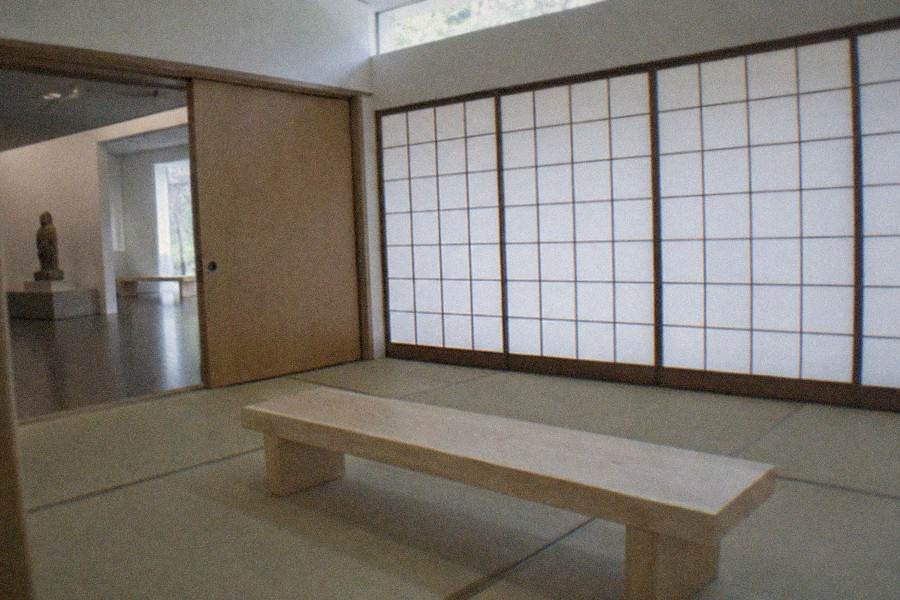
Location plays a part too. Borderless sits inside Azabudai Hills, two minutes from Kamiyacho Station on the Hibiya Line, in the middle of a dense, expensive, easily walkable part of central Tokyo. Planets sits in Toyosu, one minute from Shin-Toyosu on the Yurikamome Line, out on the man-made waterfront beside the old fish-market district. Neither is hard to reach, but Borderless slots into a central-Tokyo day more naturally, while Planets pairs well with Odaiba or the Toyosu market area.
What Is The Difference Between teamLab Planets And teamLab Borderless?
The difference is physical: Planets is a compact, barefoot, water-inclusive walk of roughly four spaces built around one long water section, while Borderless is a large, shoe-on digital museum of many rooms where artworks move across walls and floors and there is no water at all. Planets is linear and intimate; Borderless is sprawling and re-visitable. One soaks your legs to the knee, the other never does.
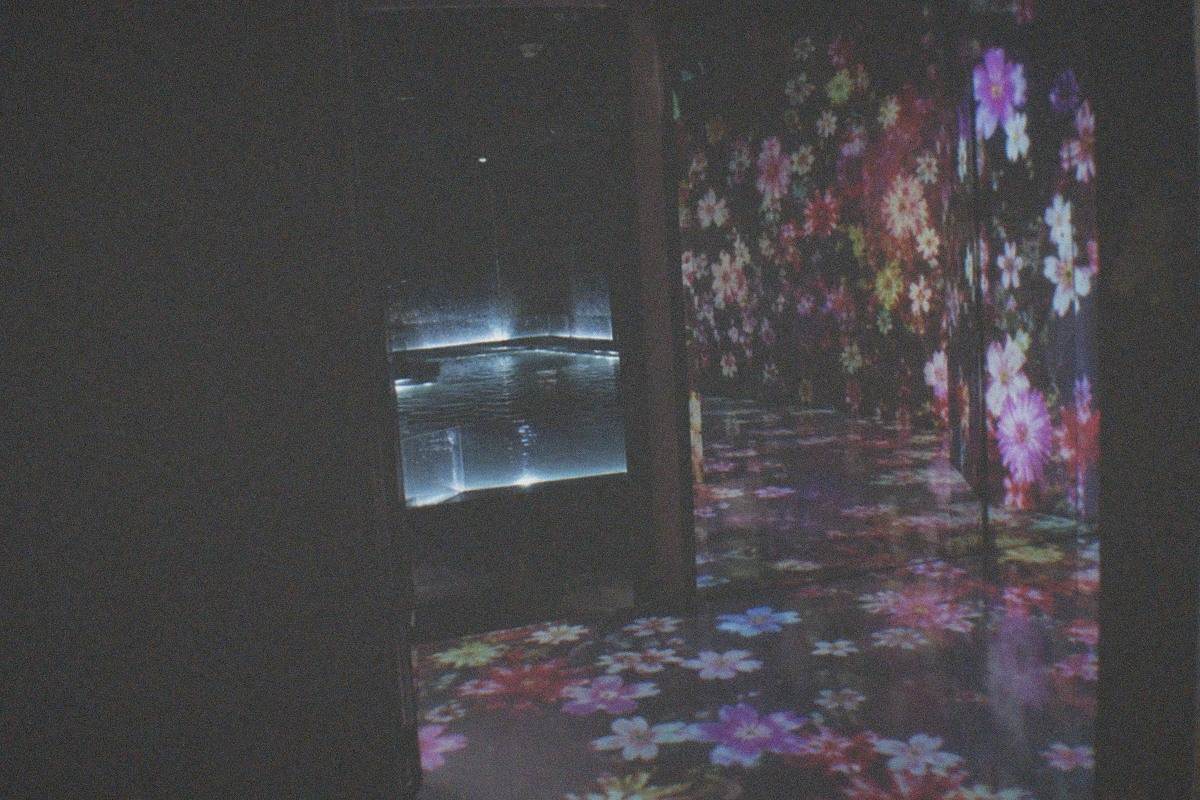
Planets, at 6-1-16 Toyosu in Koto, is built around a single continuous journey. You remove your shoes at the entrance, roll your trousers up, and move through a fixed sequence: a soft, bouncy infinity space of hanging spheres, a garden of ovoid lights, a floating flower section, and then the water, where you wade through a pool that reaches roughly to the knee while projected koi and flowers react to your movement. The route is one-way. You cannot loop back, and the whole visit runs a fairly predictable length, which we cover in detail in How Long To Spend At teamLab Planets.
Borderless, at Azabudai Hills Garden Plaza B in Minato, works on the opposite principle. There is no fixed route at all. The venue's own concept is that artworks have no boundaries: a whale might swim out of one room and into another, a forest of light might drift down a corridor. Visitors wander, double back, get pleasantly lost, and find rooms have changed since they last saw them. You keep your shoes on. Nothing gets wet.
The sensory contrast is the real answer to the question. Planets feels like a short, intense ritual: dark, warm, tactile, with the water as its climax. Borderless feels like exploring a living painting from the inside. Families with toddlers often prefer Planets because the water delights small children and the route is short, but note the practicalities in the kids section below. Photographers and people who want to stay longer often prefer Borderless, because there is simply more of it and re-entry of a room is possible.
A third option deserves a sentence, because plenty of people who love the teamLab idea want something similar but calmer. SMALL WORLDS TOKYO in Ariake is a miniature museum rather than a digital one, a walk-in diorama city of tiny moving airports, spaceports and streets, and it sells from $19.15 with a 4.6 rating across 1,254 reviews. It is a genuine alternative when both teamLab dates are gone or when the group prefers model-making wonder to immersive light.
Which One Sells Out Faster And How Far Ahead Should You Book?
Planets is the stricter booking problem: it sells advance tickets only, with no door sales at all, through the teamLab Planets official ticket store and convenience-store channels, so once a slot fills there is no fallback. Borderless uses timed slots you should book ahead for, but its official ticket website and the live listing keep selling closer to the day. Book Planets first, then Borderless.
The asymmetry matters more than most visitors expect. Borderless is a timed-slot venue, and popular weekend slots do fill, but the venue itself names its official ticket website and the live listing as its channels and tickets remain on sale up to the day when capacity allows. Planets has no such flexibility by design. Its own channels are the teamLab Planets Official Ticket Store plus Lawson Ticket and Seven Ticket convenience stores, the live listing and HIS, and there is no counter at the building where you could buy anything.
Practically, this means your Planets date should be locked before you leave home, especially for weekends, national holidays and the cherry-blossom and autumn-leaf peaks when Tokyo's timed attractions tighten up fastest. If your travel dates are fixed around a school holiday, treat the Planets slot as one of the first two things you book for the whole trip, alongside any Ghibli Museum attempt, which runs on a monthly release of its own.

Borderless rewards earlier booking with better prices as much as better slots. Because its adult pricing is date-based between 3,600 and 5,600 JPY, quieter weekdays sit at the bottom of the band, and the 200 JPY on-site surcharge means a walk-up purchase costs more than the same date bought online. That surcharge is small, but it points at the general rule: online first, at the venue only as a last resort.

The official pages for both venues spell out their own terms, and they are worth a minute before you commit: the Planets information page and the Borderless information page each carry current hours, calendar closures and the ticket channels the studios themselves recognise.
If both dates are open when you check, buy Planets first and give yourself a same-week slot for Borderless, since Borderless's flexibility is worth keeping in reserve for a rainy day. That order also matches how the two venues behave when plans change: a Borderless timed slot is a booking you can still make the evening before, while a Planets slot for a popular Saturday is a booking you may find already thin a fortnight out.
How Much Do teamLab Planets And Borderless Tickets Cost?
Both venues use date-based pricing, so neither has a single fixed adult price. Borderless publishes an official band of 3,600 to 5,600 JPY for adults 18 and over, plus 200 JPY if bought on site. Planets publishes no adult door price at all; its tickets are dated, demand-priced, and sold from $24.29 through the channels above. Borderless sells from $20.75.
The Borderless band is the one figure in this comparison the studio itself publishes, and it belongs to Borderless alone. It cannot be carried across to Planets, whose pricing moves with the calendar and is shown when you pick a date. That is not evasion, it is how both venues genuinely work: a Tuesday in February and a Saturday in April are different products at different prices.
| teamLab Planets | teamLab Borderless | |
|---|---|---|
| Product from-price | from $24.29 | from $20.75 |
| Published adult price | none, date-based | 3,600-5,600 JPY band |
| On-site purchase | not possible, advance only | possible, +200 JPY surcharge |
| Rating | 4.7 | 4.7 |
| Reviews | 21,329 | 23,793 |
| Booking rule | Advance only, no door | Timed slot, book ahead |
Children are priced differently at each venue, and the details sit on the ticket pages rather than in a single flat rule. What is safe to plan around is that both venues tier by age, that under-3s enter Planets free, and that the water section has height implications we cover below. If you are budgeting a family visit, price the exact date on the official channel before assuming anything, because the child rate moves with the adult band.
Against the rest of Tokyo's ticketed attractions, both teamLabs sit in the upper-middle of the market. They cost more than the great national museums, whose door prices run from 500 to 1,000 JPY, and less than the Warner Bros. Studio Tour, which starts at 6,600 JPY at the door. You are paying for a timed, capacity-managed digital experience, and both venues manage capacity tightly, which is exactly why the booking rules in the previous section matter.

One cost trap worth naming: neither venue appears on the Tokyo Museum Grutto Pass or on any other multi-museum pass, and no pass shortcut to either exists. If a reseller or a bundle promises otherwise, the pass in question is not covering your teamLab entry. The only honest way to buy either venue is a dated ticket through its own channels or a live listing that sells the genuine product.
Do You Get Wet At teamLab Planets?
Yes, and it is the headline experience: the water section at Planets has visitors wading barefoot through a pool that reaches roughly to the knee, with trousers rolled or shorts worn, while digital koi scatter around your legs. Borderless has no water at all. Everything about clothing, footwear and towels follows from that single difference.
The water is not a splash hazard, it is the point. Planets asks you to remove your shoes at the start, provides lockers and shorts for those who need them, and routes everyone through the pool as part of the one-way journey. People who cannot or do not want to enter the water can take a bypass route around it, which the venue provides, but the majority of visitors come specifically for this section and plan their clothing around it.
Practical clothing advice writes itself from there, and we expand on it in What To Wear To teamLab Planets: rollable trousers or shorts, nothing long and flowing, and shoes that slip off easily, since you are barefoot for the whole visit. Skirts and dresses work poorly in the water. Borderless has no dress code beyond comfortable walking shoes, because it is a shoes-on, fully dry building.
The water also answers a question people rarely think to ask: can you do both venues in one day? You can, and plenty do, but the sensible order is Borderless first and Planets second, so you are not walking around a dry museum with damp legs. Doing Planets in the morning and Borderless after lunch works only if you genuinely do not mind the residual dampness, which in Tokyo's humid summers is barely noticeable and in winter is less fun.
Which Is Better For Kids And Families?
Planets is usually the better family hour: the barefoot format, the bouncy floors and the knee-deep water delight children, and the short linear route suits small attention spans. Borderless suits older kids who like exploring, but its scale means toddlers in carriers and strollers face a longer, more crowded wander. Planets caps the experience tightly; Borderless lets it run long.
At Planets, children under 3 enter free, and the venue lends child-size shorts for the water. The trade-off is the water depth itself: knee-deep for an adult is closer to thigh-deep for a four-year-old, so an adult hand stays in the pool with small children. The floor between sections is soft and uneven by design, which toddlers enjoy and which anyone carrying a baby should know in advance, since the terrain is not stroller-friendly once the shoes come off.
Borderless is a different proposition. It is big, it is shoes-on, and strollers can move through it, which parents of napping-age children appreciate. The rooms reward curiosity: a child who wants to stand in one light room for ten minutes can, and a child who wants to chase the migrating whale artwork across the museum gets a genuine game out of it. The crowd density on weekends is the main thing to weigh, and a weekday morning slot solves most of it.
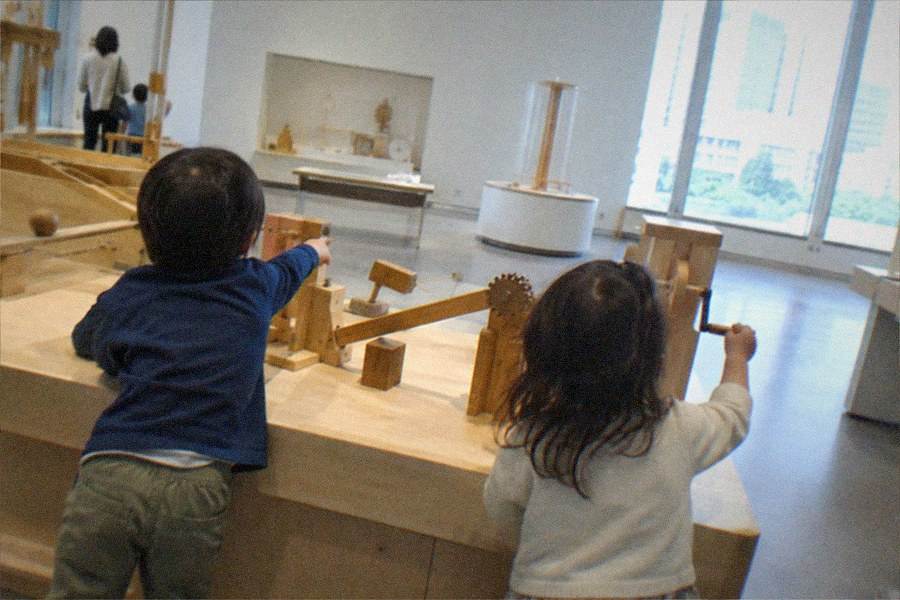
For families weighing a wider Tokyo itinerary, both venues sit near other kid-friendly stops, and our fuller rundown is in Tokyo Museums With Kids. The short version for this comparison: pair Planets with the Toyosu and Odaiba waterfront, and pair Borderless with the parks and hills of central Minato, because each venue's neighbourhood matches its energy.
Can You Walk Into Either Venue Without A Ticket?
No at Planets, sometimes at Borderless. Planets has no door sales of any kind: every entry is a pre-booked, date- and time-specified ticket, and a visitor arriving without one is turned away. Borderless sells timed slots online but does operate on-site purchase with a 200 JPY surcharge, so a same-day walk-up is possible when the day's slots have not filled.
This is the single most consequential difference for a loosely planned trip, so it is worth repeating plainly: at Planets, the ticket you bought in advance is the only thing that admits you. There is no counter, no queue for on-the-day sales, no upgrade desk. The venue's channels are the teamLab Planets Official Ticket Store, Lawson Ticket, Seven Ticket, the live listing and HIS, and all of them sell dated, timed entry.
Borderless keeps a door. The surcharge exists precisely to push buyers online, and on busy days the remaining walk-up slots vanish early, but the option is real and it has rescued many an unplanned afternoon. If your itinerary is genuinely day-to-day, that flexibility is worth real money in peace of mind, and it is a fair tiebreaker when the two venues otherwise split evenly for you.
| Booking situation | teamLab Planets | teamLab Borderless |
|---|---|---|
| Bought online in advance | Standard route | Standard route, cheaper than on site |
| Walk up on the day | Not possible at all | Possible, +200 JPY, subject to slots |
| Same-day purchase online | Yes, if slots remain | Yes, if slots remain |
| Group size limits | Per the ticket store's terms | Per the ticket site's terms |
| Cancellation or change | Per the ticket store's terms | Per the ticket site's terms |
One planning note for the day itself: both venues enforce entry windows, and arriving well outside your slot risks a wait or a refused entry at busy times. The crowd rhythm is the same at both, with the first slots of the day and the late-afternoon slots quietest, a pattern we break down in Best Time To Visit teamLab Planets, whose logic transfers to Borderless almost unchanged.
Which One Should You Actually Choose?
Choose Planets if you want the once-in-a-trip water experience, can commit to advance booking, and are happy with a short, intense, one-way visit. Choose Borderless if you want the bigger, drier, wander-anywhere museum, value same-day flexibility, and are visiting on a day that is not one of its irregular closing Tuesdays. Splitting the difference by doing both in one day works well.
The tiebreaker questions, in order of how often they decide it. First, the calendar: if your only free day is a Tuesday, check Borderless's calendar before anything else, because its closures are irregular rather than weekly. Second, the water: if the knee-deep pool is the thing that drew you to teamLab in the first place, Planets is the only venue that has it, and no amount of Borderless's scale substitutes. Third, the booking discipline: if you are the kind of traveller who books nothing before landing, Borderless will forgive you and Planets will not.
There is also a longevity angle that few guides mention. Planets was originally framed as a temporary venue and has been announced to operate through the end of 2027, which settles the recurring will-it-close rumour for now, but its history means the "see it before it goes" logic genuinely applies to it and not to Borderless. Borderless, for its part, already closed once at its old Odaiba home and reopened at Azabudai Hills, so the current building is the venue's second life. Neither fact argues for panic booking, but both argue against assuming either venue waits for you indefinitely.
| If you... | Pick |
|---|---|
| Want the water and barefoot experience | Planets |
| Are visiting on a Tuesday | Check Borderless's calendar first, Planets has no fixed closing day |
| Book nothing in advance | Borderless, the only one with a door |
| Have toddlers who love water | Planets, with an adult in the pool |
| Want the longest visit for the money | Borderless |
| Are doing both in one day | Borderless first, Planets second, dry legs first |
For most first-time visitors with a fixed short trip, the sequence that works is: check both calendars, buy the Planets slot for your best date, then buy Borderless for the day before or after, and keep the Borderless slot's flexibility as your weather valve. If rain washes out a Fuji day, you have a museum afternoon ready; if the sun holds, Borderless's slot is the one you can most easily reschedule or skip.
And if the real reason you are comparing the two is that both sold out before you looked, do not treat the trip as lost. SMALL WORLDS TOKYO in Ariake, a short Yurikamome ride from Planets' own neighbourhood, is a completely different kind of wonder, a walk-in miniature world with a 4.6 rating across 1,254 reviews, walk-in entry and tickets from $19.15. Tokyo's immersive-attraction bench is deeper than the two teamLabs, as our Best Museums In Tokyo roundup shows, and a sold-out teamLab date is a redirection, not a ruin. This whole site, Tokyo Museums, exists to make that kind of redirection easy.
Common Questions About teamLab Planets Vs Borderless
Which is better, teamLab Planets or teamLab Borderless?
Neither is objectively better; they are different experiences. Planets is the short, barefoot, water-inclusive visit for people who want one intense, unusual hour. Borderless is the bigger, drier, room-to-room digital museum for people who want scale and flexibility. Both rate 4.7 with large review bases.
Can you get wet at teamLab Borderless?
No. Borderless is fully dry, shoes stay on, and there is no water section. The knee-deep wading pool exists only at teamLab Planets in Toyosu.
Which teamLab is cheaper?
Both are date-priced. Borderless publishes an adult band of 3,600 to 5,600 JPY plus a 200 JPY on-site surcharge, and sells from $20.75. Planets publishes no adult door price and sells from $24.29. On most dates the difference is small and should not decide the visit.
Can I buy teamLab Planets tickets at the door?
No. Planets sells advance tickets only, through the teamLab Planets Official Ticket Store, Lawson Ticket, Seven Ticket, the live listing and HIS. There is no on-site counter, so book before you travel.
Is teamLab Borderless closed on Tuesdays?
Borderless closes on irregular Tuesdays, so check its calendar for your specific date. Planets publishes no fixed weekly closing day and also runs a month-by-month calendar.
Can I visit both teamLab venues in one day?
Yes. The sensible order is Borderless first and Planets second, so you finish with the water rather than walking around a dry museum with damp legs. The venues are in different parts of Tokyo, roughly 40 to 60 minutes apart by train.
Is teamLab Planets closing soon?
Planets has been announced to operate through the end of 2027, so the recurring closure rumour is settled for now. It remains a dated, advance-only venue, so the booking discipline still applies.
Which teamLab is better for kids?
Planets for younger children who love water and short visits, with an adult in the pool since knee-deep for an adult is deeper on a child. Borderless for older kids who enjoy exploring, since it is stroller-friendly and lets a child linger in any room.
Choose Your Museum Experience
Start With This Option
Have a date in mind? Plan teamLab Planets TOKYO before arranging the rest of your day.
Timed admission to the barefoot, water-based digital art experience in Toyosu. Wear clothes you can roll above your knees; transport is separate.
Tailor Your Choice And Compare Alternatives
teamLab Planets TOKYO: Timed admission to the barefoot, water-based digital art experience in Toyosu. Wear clothes you can roll above your knees; transport is separate.
teamLab Borderless: Timed admission to teamLab’s room-free digital art museum at Azabudai Hills. A different venue from Planets, without its barefoot water route.
SMALL WORLDS TOKYO: Admission to the miniature worlds, model cities and moving airport displays in Ariake. Custom miniature-making and other extras are separate unless listed.
Set your teamLab Planets TOKYO date before arranging the rest of your day.
Choose Your teamLab Planets TOKYO Date