Does A Mori Art Museum Ticket Include The Observation Deck?
A Mori Art Museum ticket covers the 53rd-floor galleries only. The observation deck is Tokyo City View on the 52nd floor, a separate venue with its own ticket, unless you buy the combined Roppongi Hills ticket.
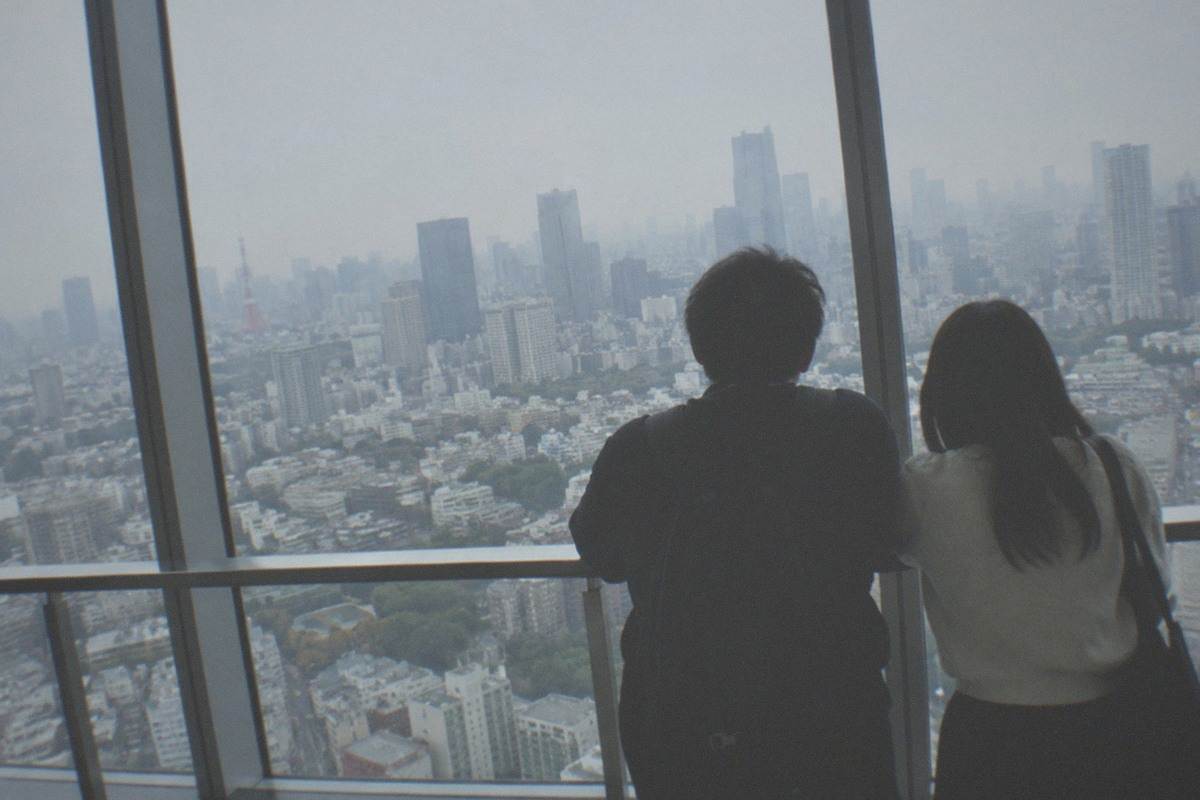
The Mori Art Museum occupies the 53rd floor of Roppongi Hills Mori Tower at 6-10-1 Roppongi, Minato-ku, a short walk from Roppongi Station on the Hibiya and Oedo lines. The observation deck, the one with the famous glass panels and the skyline stretching out toward Tokyo Bay, is a separate operation called Tokyo City View, one floor below on the 52nd. Two floors, two venues, two ticket desks. The confusion between them is the single most common question this site gets about Roppongi, and the honest answer depends on which ticket you buy and, awkwardly, on the date you visit, because the museum shuts completely between exhibitions while the deck keeps running.
Does A Mori Art Museum Ticket Include The Observation Deck?
No, a standard Mori Art Museum ticket covers only the 53rd-floor exhibition galleries and does not include the observation deck. The deck is Tokyo City View on the 52nd floor, a separate venue with its own admission. The exception is the combined Roppongi Hills ticket, which bundles the museum and the observatory into one purchase, though that product currently reports out of stock on the live listing.
The split is structural, not marketing. The museum is a curated contemporary art institution that mounts temporary exhibitions and holds no permanent collection on show. Tokyo City View is an observatory business, open whatever is happening upstairs, selling its own admission, its own annual passes and its own evening surcharge. A visitor who buys a museum ticket at the museum's own counter on the 53rd floor and then looks for the deck will be sent back down a floor to buy again.
The combined ticket exists precisely because so many people want both. On this site's data it is listed as the "Roppongi Hills Observatory & Mori Art Museum Ticket", a bundle covering Tokyo City View and the museum in one purchase. It is worth knowing that this product currently reports out of stock, so a reader planning around it should check the operator's live listing before assuming it is purchasable. When it is available it is the only single ticket that answers this question with a yes.
There is a second, quieter trap. Because the museum closes between exhibitions, a combined ticket bought for a date inside one of those gaps would be a deck ticket in practice. The current gap runs 24 September to 30 October 2026, between the Ron Mueck exhibition, which ends 23 September, and the next show, which opens 31 October. The museum's own site states plainly that it is closed to the public whenever no exhibition is running.
If your Roppongi afternoon is really about the view rather than the art, plan around the deck's hours and treat the museum as the add-on. If it is about the art, book the exhibition you actually want to see and check whether the combined product is selling again that week.
For a fuller art-day plan around the tower, the site's guide to Tokyo's art museums covers which venues need advance slots and which you can walk into, and the question of whether the Mori Art Museum is the same as teamLab comes up often enough to have its own answer.
What Does The Combined Roppongi Hills Ticket Actually Cover?
The combined ticket covers two venues: the Mori Art Museum's current exhibition on the 53rd floor and Tokyo City View, the 52nd-floor observatory. It does not cover the rooftop Sky Deck, which is sold as a separate add-on at the venue, and it does not cover anything else in Roppongi Hills. On this site's data the bundle currently reports out of stock on the live listing.
Read the small print and the product is honest about its scope. The observatory portion gets you the 52nd-floor indoor viewing floor with its glass walls. The museum portion gets you whatever exhibition is running that day, and only that exhibition, because there is no permanent collection to fall back on. If the exhibition is one you have no interest in, the museum half of the bundle buys you very little.
The practical comparison, floor by floor, looks like this:
| Venue | Floor | What a ticket covers | Sold separately? |
|---|---|---|---|
| Mori Art Museum | 53F | The current temporary exhibition only | Yes, at the museum's own ticket site and counter |
| Tokyo City View | 52F | The indoor observation floor | Yes, at the venue |
| Sky Deck | Rooftop | Open-air rooftop viewing | Add-on at the venue, not part of the bundle |
| Combined ticket | Both | Museum exhibition plus Tokyo City View | One purchase, currently reporting out of stock |
Two things follow from that table. First, the museum and the deck have genuinely different rhythms: the deck is open year-round regardless of exhibitions, while the museum goes dark between shows. Second, the combined ticket is the only product that removes the decision from your day, and its availability moves, so it is worth a quick check of the operator's live listing before you build an itinerary around it.
One caution this site wants on the record: the closure dates sometimes quoted for the observatory belong to Tokyo City View, a different venue in the same tower, and the museum's own closure windows are set by the exhibition schedule. Never assume a closure notice at the tower's base applies to both floors, and never assume the museum is open just because the deck is.
Why The Mori Art Museum Has No Fixed Admission Price
The Mori Art Museum prices admission per exhibition, so there is no standing adult rate the way there is at Tokyo National Museum. Each show sets its own figure, it goes on sale when that show opens, and it disappears when the show closes. The current figure is always on the museum's own site, and this site does not print one, because any number would belong to a single exhibition and mislead readers visiting during the next one.
This is worth pausing on, because almost every published guide gets it wrong by quoting a number that expired with an exhibition. A museum without a permanent collection cannot have a durable admission price. What the museum does publish is the exhibition calendar, the ticket channel and the fact that it closes between shows. Those three facts are stable. The price is not.
The booking route is simple when a show is running: the museum's own online ticket site sells advance admission, and there is a same-day window at the museum itself. There is no weekly closing day at all, which is unusual in Tokyo and is one reason the museum features in this site's answer to the Monday problem, with the date caveat that follows later in this article.
If you are comparing a Roppongi art stop against cheaper classics, the arithmetic is straightforward. Tokyo National Museum charges 1,000 JPY at the door for its collection exhibitions, with tickets from $6.65 online, holds a 4.7 rating across 647 reviews, and is the kind of museum where the ticket buys a building full of permanent galleries rather than one floor of a temporary show. The Tokyo National Museum must-see guide covers what that 1,000 JPY actually gets you into.
When Is The Mori Art Museum Closed Between Exhibitions?
The museum closes whenever no exhibition is running, and the current gap runs 24 September to 30 October 2026: the Ron Mueck show ends 23 September and the next exhibition opens 31 October. Later gaps are set by the exhibition schedule, not fixed dates. A separate, longer renovation closure has been announced for September 2027 to April 2028.
This is the part of the answer that changes with the calendar, and it is why a flat "yes, buy the combined ticket" would be dishonest. A reader visiting Roppongi in October 2026 will find the 53rd floor dark and the 52nd-floor deck running as normal. The museum's own visit page states the rule in one line: the museum is closed to the public when there are no ongoing exhibitions.
The closure windows that matter:
| Window | Scope | Reopens |
|---|---|---|
| 24 September to 30 October 2026 | Whole museum, between Ron Mueck and the next exhibition | 31 October 2026 |
| Later 2026 gaps | Set by the exhibition schedule, announced per show | Check the museum's own exhibition page |
| September 2027 to April 2028 | Whole museum, announced renovation closure | April 2028 |
A reader planning a 2027 trip should treat the museum as a check-first venue rather than a guaranteed stop, and a reader holding a combined ticket for a date inside a gap should expect the deck half to be the only half that functions. The observatory, by contrast, is a year-round operation and does not follow the exhibition calendar at all.
The museum's own exhibition pages are the authoritative source for the next opening date, and they are updated as each show is announced. This site will not guess a future gap, and neither should a reader's itinerary.
What Is Open In Roppongi On A Monday?
On most Mondays the Roppongi answer is the National Art Center, Tokyo and the Mori Art Museum, five minutes apart, because both open on Monday while the big Ueno nationals close. But the answer depends on the date: from 24 September to 30 October 2026 the Mori is shut between exhibitions, so the Monday answer in Roppongi is the National Art Center alone. The Mori rejoins it from 31 October 2026.
Monday is the day the Ueno cluster fails a visitor. Tokyo National Museum, the National Museum of Western Art and the National Museum of Nature and Science all close on Mondays, following the standard convention of opening on a holiday Monday and closing the following weekday instead. Roppongi is the escape, and the National Art Center, Tokyo is the anchor: it is free to walk into, it has no permanent collection at all, it tickets every exhibition separately, and it closes Tuesday, not Monday.
The honest sentence, the one a reader can act on, is date-split. Write it down as two answers. From 24 September to 30 October 2026: the National Art Center alone. From 31 October 2026 onward: the pair again, with the Mori open on Mondays because it has no weekly closing day at all.
The National Art Center's free entry covers the building itself: the Kisho Kurokawa glass facade and atrium, the art library, the shop and the restaurant floor. It does not cover any exhibition. That distinction matters to anyone budgeting a Roppongi day, and this site's free museums in Tokyo guide spells out the same shape at the Tokyo Metropolitan Art Museum in Ueno.
Is The Sky Deck The Same As Tokyo City View?
No. Tokyo City View is the 52nd-floor indoor observation floor included in the combined ticket. The Sky Deck is the open-air rooftop above it, sold as a separate add-on at the venue, and it is the one part of the Roppongi Hills viewing offer that no museum ticket reaches at all.
Visitors conflate the two because they share a ticket counter and a lift lobby, but the products are distinct. The indoor floor is the all-weather option, glass on every side, open in rain and heat alike. The rooftop is the open-air option, exposed to weather, and it carries its own charge on top of observatory admission. A combined museum-and-observatory ticket stops at the indoor floor.
The planning implication is simple. If the open sky is the point of your visit, budget for the rooftop add-on separately and check whether it is running that day, because an open-air deck in rain closes or stops selling. If the glass panorama is enough, the observatory ticket alone covers it, and the museum can be added, or not, according to the exhibition calendar above.
What Pairs Well With A Roppongi Art Day?
The strongest pairing for a Roppongi art afternoon is teamLab Borderless at Azabudai Hills, a few minutes away by metro, because both stops are indoor, both are floor-through experiences rather than object museums, and Borderless runs on timed slots that slot neatly around a museum visit. Tokyo National Museum in Ueno is the classic alternative when you want depth over spectacle.
teamLab Borderless sits at Azabudai Hills Garden Plaza B, B1, 5-9-1 Toranomon, a two-minute walk from Kamiyacho Station on the Hibiya Line, which is one stop from Roppongi territory. Tickets start from $20.75, the venue holds a 4.7 rating across 23,793 reviews, and entry is by timed slot, so you book the slot you want rather than queuing. It closes on irregular Tuesdays, so the museum's own calendar is the check, not a fixed weekday. The official teamLab site carries the current calendar and the ticket channel, and the live listing is the only other channel teamLab itself names as official.
Readers comparing the two teamLab venues should note that Planets, over in Toyosu, sells advance-only with no door sales at all, from $24.29, holding 4.7 across 21,329 reviews, and that the venue has announced it will operate through the end of 2027. The full comparison lives in the site's teamLab Planets versus Borderless guide, and the practical differences, bare feet and water at Planets versus a walk-through maze at Borderless, are covered in what to wear at teamLab Planets.
For a slower, cheaper contrast, the Tokyo National Museum route from Roppongi is one metro ride to Ueno, and its collection exhibitions are free on 19 May, 21 September and 3 November 2026, with the museum otherwise closed on Mondays. Its Honkan gallery rooms run a rolling programme of closures through the winter, with Room 4 shut 26 October 2026 to 26 April 2027 and Rooms 2-3 shut 14 December 2026 to 26 April 2027, so the museum's own visitor page is the check for a room-by-room plan.
Does The Grutto Pass Help With The Mori Art Museum?
Partly. The Tokyo Museum Grutto Pass gives a discount at the Mori Art Museum on both the collection and special exhibitions, with some exhibitions excluded, but it gives nothing at Tokyo City View, because the observatory is not a museum and is not on the pass. The pass costs 2,500 JPY and is a discount card, not a free-entry card, and it excludes both teamLab venues outright.
The pass is the one Tokyo-wide product that touches the museum at all, and it is worth being precise about how. The official Grutto Pass site splits every listing into free entry or a discount, and the split differs per facility. At the Mori the pass is a discount on admission, subject to per-exhibition exclusions. It does not touch the observatory, the Sky Deck, or any combined ticket.
The exclusions matter more than the inclusions for a Roppongi-style day: the pass excludes teamLab Borderless, teamLab Planets, the Ghibli Museum, the Warner Bros. Studio Tour, the National Art Center, Nezu, Artizon, and special exhibitions almost everywhere. Anyone whose Tokyo plan is heavy on the big ticketed attractions will get little from it, and this site's Grutto Pass worth-it guide works the break-even arithmetic in full.
How Should You Plan The Roppongi Ticket Purchase?
Decide the deck question first, then the art. If you want both the exhibition and the view, check whether the combined ticket is selling again on the operator's live listing before you commit to a date. If you only want the view, buy Tokyo City View alone. If you only want the art, buy from the museum's own ticket site and pick a date outside a between-exhibition gap.
The sequence matters because the failure modes are different. The deck fails only on weather, for the rooftop, and on crowd. The museum fails on the calendar: buy a ticket for a date inside a gap and there is nothing on the 53rd floor to see. The combined product fails on availability, which is a moving target rather than a rule.
If the Roppongi day is one stop on a longer art itinerary, the Toyosu venue makes a strong second half. teamLab Planets sells advance-only, with no door sales at all, from $24.29, and holds a 4.7 rating across 21,329 reviews. Because there is no walk-up option, the booking has to happen before you leave for the day, which makes it the one item on a Roppongi art plan that cannot be improvised.
A quick reference for the decision:
| You want | Buy | Main risk to check |
|---|---|---|
| The exhibition only | Museum's own ticket site, advance or same-day window | The between-exhibition gap, currently 24 September to 30 October 2026 |
| The view only | Tokyo City View at the venue | Weather, if you also want the rooftop Sky Deck |
| Both | The combined Roppongi Hills ticket | It currently reports out of stock, so check the live listing |
| The rooftop | Sky Deck add-on at the venue | Sold separately, weather dependent |
Whichever route you take, keep the two floors straight in your notes. The museum is the 53rd, the deck is the 52nd, and no ticket to one is a ticket to the other unless it says both on the face. This site, Tokyo Museums, keeps the per-venue booking routes for every museum in the lineup, because in Tokyo the real price of a museum day is not the yen figure, it is which venues you can walk into and which need a slot booked days ahead.
Common Questions About Mori Art Museum Tickets And The Observation Deck
Does A Mori Art Museum Ticket Include The Observation Deck?
No. A standard museum ticket covers only the 53rd-floor exhibition galleries. The observation deck is Tokyo City View on the 52nd floor, a separate venue with its own ticket. Only the combined Roppongi Hills ticket covers both, and that product currently reports out of stock on the live listing.
Is Tokyo City View The Same As The Mori Art Museum?
No. Tokyo City View is the 52nd-floor observatory, run separately from the 53rd-floor Mori Art Museum. They share a tower, not a ticket. The Sky Deck rooftop above them is a third product, sold as an add-on at the venue.
How Much Does The Mori Art Museum Cost?
Admission is priced per exhibition and changes with each show, so there is no standing adult rate. The current figure is on the museum's own site. This site does not print one, because any number would belong to a single exhibition and mislead readers visiting during the next.
When Is The Mori Art Museum Closed?
It closes whenever no exhibition is running. The current gap is 24 September to 30 October 2026, reopening 31 October 2026. Later gaps follow the exhibition schedule. A longer renovation closure has been announced for September 2027 to April 2028. The museum has no weekly closing day.
Is The Mori Art Museum Open On Mondays?
Yes, on most Mondays, because it has no weekly closing day. The exception is a between-exhibition gap: from 24 September to 30 October 2026 the museum is shut every day, and the Monday answer in Roppongi is the National Art Center, Tokyo alone, which closes Tuesday instead.
Does The Grutto Pass Cover The Mori Art Museum?
Partly. The pass gives a discount on Mori admission on both the collection and special exhibitions, with some exhibitions excluded. It gives nothing at Tokyo City View, and it excludes both teamLab venues, the Ghibli Museum and the Warner Bros. Studio Tour entirely.
What Is The Best Alternative If The Museum Is Shut?
The National Art Center, Tokyo is five minutes away, opens on Mondays, closes Tuesdays, and is free to enter, though every exhibition inside is ticketed separately. teamLab Borderless at Azabudai Hills is a short metro ride away and runs on timed slots from $20.75.
Choose Your Museum Experience
Start With This Option
Have a date in mind? Plan teamLab Borderless before arranging the rest of your day.
Timed admission to teamLab’s room-free digital art museum at Azabudai Hills. A different venue from Planets, without its barefoot water route.
Tailor Your Choice And Compare Alternatives
teamLab Borderless: Timed admission to teamLab’s room-free digital art museum at Azabudai Hills. A different venue from Planets, without its barefoot water route.
THE TOKYO PASS: Explore 50+ Museums, Gardens & Attractions: A digital pass for participating Tokyo museums and attractions. Choose a pass duration; a subway ticket is an optional extra. Check the current venue list before comparing your total.
Select a date to see scheduled departures. Your date and the final price are confirmed on the booking page.
Set your teamLab Borderless date before arranging the rest of your day.
Choose Your teamLab Borderless Date