Is The Ghibli Museum Worth Visiting, And How Long Do You Need?
Is the Ghibli Museum worth visiting, and how long do you need? What 1,000 JPY admission buys in Mitaka, why there is no door ticket, and how much time to budget from central Tokyo.
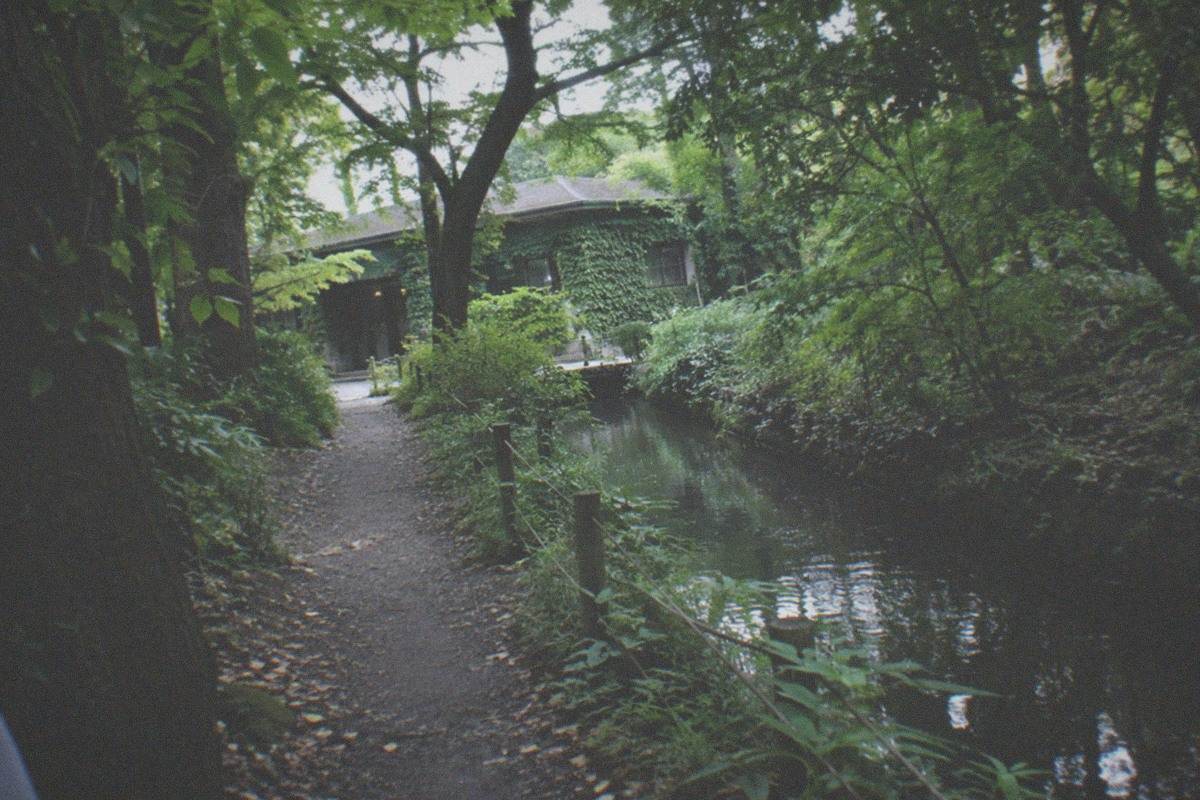
A cream-colored building with greenery climbing its walls sits a fifteen-minute walk from Mitaka Station, and on most mornings a quiet line of visitors with pre-purchased, name-printed tickets files through its doors. The Ghibli Museum is one of the smallest famous museums in Japan, and also one of the hardest to get into, because it does not sell a single ticket at its own entrance. That combination, modest size plus hard ticketing, is exactly why the question of whether it is worth visiting has two answers: the museum inside is an easy yes, and the planning around it is where most visits are won or lost.
The museum rewards Ghibli fans who accept a strict Lawson release, a no-photography interior and a half-day journey. The JTB Sunrise tour fits only when its full-day arrangement solves the ticket problem. Explore Ghibli Museum, Mitaka
Is The Ghibli Museum Worth Visiting, And How Long Do You Need?
For most visitors, yes: the Ghibli Museum rates 4.7 across 458 reviews, admission is 1,000 JPY for ages 19 and over, and the two to three hours inside are dense, hand-crafted and genuinely unlike any other museum in Tokyo. Plan half a day door to door. The real cost of the visit is not money but planning, because no ticket of any kind is sold at the door.
The honest framing starts with what the museum is not. It is not large, it is not a theme park, and it is not a place to photograph every room: photography inside is banned, full stop, which changes the rhythm of a visit more than most people expect. What it is, is a compact building in Mitaka, in western Tokyo, where the studio's film-making world is built into the architecture itself, from the wood-and-glass interior to the details tucked into corners and stairwells. Visitors move through it without a fixed route, and the museum's own design philosophy rewards slow looking over checklist coverage.
The time question has a cleaner answer. The museum itself is a two to three hour experience on site, with timed entry that spreads arrivals through the day. Getting there from central Tokyo adds roughly 40 to 60 minutes each way on the JR Chuo Rapid Line to Mitaka Station, then either a 15-minute walk or the community bus, which runs every 15 minutes and costs 230 JPY for an adult. Door to door, budget a half day: the visit itself plus travel plus the inevitable stop at the museum shop, which for many families turns out to be the most expensive room in the building.
That half day is the honest number. Visitors who try to bolt the Ghibli Museum onto a packed Shinjuku or Shibuya afternoon usually arrive rushed, and the timed-entry system means arriving late does not simply shift your slot forward. The museum is a destination that asks you to organize the day around it, and the sections below break that organization into its parts: the ticket, the inside, the clock, and the one guided option that removes the ticket problem entirely.
How Do You Actually Get Ghibli Museum Tickets?
Ghibli Museum tickets are sold through exactly two channels, both named by the museum itself: Lawson Ticket, which releases each month's tickets at 10:00 JST on the 10th of the previous month, first come, and the Special Bus Tour by Sunrise Tours JTB, a full-day guided coach trip with museum admission included and prebooked by the operator. There is no door sale of any kind, no walk-up window, and no same-day purchase at the museum.
The primary route is Lawson Ticket, and the museum's own tickets page says so plainly. The mechanics matter more than most guides admit. A Lawson WEB membership with phone verification is required, the member's name is printed on every ticket and cannot be changed, and each account can make one purchase per month, with a maximum of six tickets. The release happens at 10:00 JST on the 10th of each month for the following month, and it is first come: the popular dates and times go within minutes, so anyone serious about a specific day needs to be logged in and ready before 10:00, not at 10:05.
| Ticket route | What it costs | When it is sold | What it includes | The catch |
|---|---|---|---|---|
| Lawson Ticket (primary) | 1,000 JPY for ages 19 and over | 10:00 JST on the 10th, for the following month, first come | Museum admission only, date and time specified | Name printed on the ticket, one purchase per account per month, maximum six |
| Special Bus Tour by Sunrise Tours JTB (fallback) | From $179.19 per person | Bookable ahead through the operator, at least 10 days before travel | Full-day coach tour, guide, set lunch, a second museum stop, reserved Ghibli slot | Non-refundable for any reason, residents of Japan cannot book it, guide does not enter the museum |
The reason the ticket rules are so strict is the museum's own position on resale, stated in its own words: ticket purchase for resale is not allowed. Tickets are named, the purchaser's name is printed on the face, ID may be checked at the entrance, and entry may be refused if the named person is absent. Every third-party listing that appears to sell plain Ghibli admission is unofficial, and a resold ticket is one the museum's stated policy says does not admit. The only channels this site points to are the two the museum names, and the museum's own tickets page carries both.
Planning a Ghibli day also means choosing a date that exists on the museum's calendar. The venue runs a month-by-month opening calendar rather than a fixed weekly closing day, so any guide that tells you a fixed weekday closure should be treated with caution: check the museum's own calendar for the month you are traveling. This site's companion pieces go deeper on the mechanics, including how to buy Ghibli Museum tickets step by step, and what to do when the release has already passed you by, covered in what to do when Ghibli Museum tickets are sold out.
What Is Inside The Ghibli Museum?
The inside of the Ghibli Museum is a hand-built, no-photography interior organized around how animated films are made rather than around a collection of objects, with rooms you wander freely rather than a fixed route, and a shop and cafe that exist as part of the visit. It is small, dense and designed to be looked at slowly. The building itself, by design, is half the exhibit.
Start with what dominates the first impression: the interior is warm, wooden and deliberately old-fashioned, with stained glass, spiral staircases and hand-placed detail everywhere the eye lands. The exhibits are built around the studio's working process, the making of animation as a craft, and they reward visitors who take their time rather than those who sweep through. There is no fixed route through the building, which is unusual for a museum this famous, and it means two visits can feel genuinely different depending on which staircase you take first.
The rule that reshapes the visit most is the photography ban. No photos inside, and the rule is enforced. This sounds like a limitation, and it is, but it also changes the pace of a visit in a way many visitors come to appreciate: nobody stands in the good spot for ten minutes framing a shot, and the rooms feel lived-in rather than performed. The exterior, by contrast, is one of the most photographed museum facades in Tokyo, so the standard pattern is photos outside, phone pocketed inside.
The practical shape of a visit is a shop and a cafe alongside the exhibit spaces, and both get busy in the middle of the day. Families with young children tend to move fastest through the exhibits and slowest through the shop, which is worth knowing when you time your arrival slot: a late-morning entry means exiting into the busiest shop window of the day. There is no permanent collection in the conventional sense, no room of masterpiece objects under glass, and anyone expecting a conventional art museum walk will find the building itself is the permanent exhibit.
Visitors who want the full context, including how the Mitaka museum differs from a completely different attraction in Aichi with a similar name, can read the difference between the Ghibli Museum and Ghibli Park. The short version: Ghibli Park is in Aichi, hours from Tokyo, and is a different place entirely. In Mitaka, what you are visiting is one compact museum building in a park, reached by a 15-minute walk or a 230 JPY community bus ride from the station's south exit.
How Long Should You Plan For A Ghibli Museum Visit?
Plan two to three hours inside the museum and half a day door to door from central Tokyo: the JR Chuo Rapid Line runs roughly 40 to 60 minutes each way from Shinjuku or Tokyo, with a return fare in the rough range of 900 to 1,400 JPY, then a 15-minute walk or the community bus at 230 JPY for an adult. Timed entry means punctuality is part of the ticket.
The on-site number comes down to temperament. Visitors who read slowly, sit in the cafe, and let the shop take its toll land nearer three hours, and that is the number to use if the museum is the day's main event. Two hours covers the building comfortably for a brisk walker. The timed-entry slot is not a strict two-hour window in the way some attractions work, but arriving late compresses everything, and the shop and cafe queues build toward the middle of the day, so an earlier slot buys a calmer visit at the same ticket price.
| Part of the day | Typical time | Notes |
|---|---|---|
| JR Chuo Rapid from Shinjuku or Tokyo to Mitaka | Roughly 40 to 60 minutes each way | Return fare roughly 900 to 1,400 JPY, a range from route planners, not an operator figure |
| Mitaka Station south exit to the museum | 15 minutes on foot, or the community bus every 15 minutes | Bus is 230 JPY per adult, 120 JPY per child in cash or 50 JPY by IC card |
| Inside the museum | 2 to 3 hours | No photography inside; shop and cafe add time at the end |
| Total from central Tokyo | Half a day | Add buffer for the shop, which many families underestimate |
The half-day frame is also what makes the Ghibli Museum easy to combine or hard to combine, depending on your appetite. Mitaka is on the western edge of the 23 wards, so pairing the museum with something central in the same morning does not work; pairing it with a relaxed afternoon in Kichijoji, the station one stop back toward town, is the pattern many visitors fall into naturally. Anyone determined to see the museum plus a second major Tokyo attraction in one day should build the second one into the evening, not the afternoon.
One timing trap deserves its own sentence: the ticket release calendar. Because tickets go on sale at 10:00 JST on the 10th of the month before, a trip planned six weeks out is easier to ticket than one planned three weeks out, when the current month's release has already happened and the next one has not. Working backwards from your travel dates to the nearest release day is the single most useful piece of Ghibli planning, and it costs nothing.
Is The Sunrise Tours JTB Bus Tour Worth The Money?
The bus tour, from $179.19 per person against a 1,000 JPY museum admission, is worth it only as a fallback or as a deliberately arranged day: it is a full-day guided coach trip with a set lunch, a second museum stop and a reserved Ghibli slot, never a queue shortcut or a cheap ticket. It is non-refundable, must be booked at least 10 days ahead, and residents of Japan cannot book it.
The price gap is the first thing to state and the last thing to forget. Museum admission is 1,000 JPY; the tour sells from $179.19. That premium is not buying a ticket workaround, it is buying a coach, a guide, a Japanese set lunch, a second museum stop and a reserved slot the operator has prebooked, which is why no personalized Lawson ticket is ever issued to the customer and no name or ID is ever asked for. Reviewers on the live listing say much the same in their own words: they came for the museum and remember the day around it.
The itinerary since 1 October 2025 is a Japanese set lunch at Meiji Kinenkan or Tenkuunoniwa Hoshinonaruki, then the Edo-Tokyo Open Air Architectural Museum for 1 hour 15 minutes, which becomes Jindaiji Temple or Takahata Fudoson Temple on Mondays, then the Ghibli Museum for 2 hours 30 minutes. It is not a three-museum bundle, and anyone booking it should expect a full day, not a morning. The hard terms travel with the recommendation: non-refundable for any reason, book at least 10 days ahead, no photography inside the Ghibli Museum, the guide does not enter the museum with the group, and residents of Japan cannot book it.
So who should take it? Someone who missed the 10:00 JST release, cannot use Lawson Ticket's phone verification from abroad, or wants the whole day arranged rather than self-assembled. Lawson remains the primary route on this page and every page: it is cheaper, it is the museum's own main channel, and it works fine with preparation. The tour is the honest fallback, and the fact that admission is prebooked by the operator is what makes it a clean one, because the museum's resale policy does not reach it.
Who Should Skip The Ghibli Museum?
Skip the Ghibli Museum if you cannot be ready at a specific 10:00 JST release moment, if a 1,000 JPY museum with a photography ban sounds like a bad trade, or if your Tokyo days are too few to spend planning on one small venue. Tokyo has timed-slot and walk-in alternatives that cost no planning at all, and for some travelers those are simply better value.
The clearest skip case is the short-trip visitor. If you are in Tokyo for two full days, spending one of your planning sessions on a first-come monthly ticket release for a two-to-three-hour museum is a real opportunity cost. The museum is excellent at what it is, but what it is, is small, and the visitors who regret it most are the ones who built a whole day around it expecting a theme park's worth of content. Expectation, not quality, is what produces the rare negative review.
The alternatives are strong and much easier to ticket. teamLab Planets TOKYO in Toyosu is advance-only with no door sales, so it shares the Ghibli planning burden, but it sells from $24.29, rates 4.7 across 21,329 reviews, and delivers a completely different, walk-through-water experience of digital art. It is a short walk from Shin-Toyosu Station, one minute on the Yurikamome Line. For pop-culture fans who want the merchandised, photographs-everywhere version of a museum day, the Snoopy Museum Tokyo at Minami-machida Grandberry Park runs timed-slot tickets with 2,000 JPY advance and 2,200 JPY same-day pricing for adults, four minutes from its own station. SMALL WORLDS TOKYO, the miniature-world museum in Ariake, is 3,200 JPY at the door and can simply be walked into.
| Alternative | Ticket model | What it costs | Why choose it instead |
|---|---|---|---|
| teamLab Planets TOKYO | Advance only, no door, timed entry | Sells from $24.29 | Immersive digital art, huge review base, no name printed on the ticket |
| Snoopy Museum Tokyo | Timed slot, book ahead | 2,000 JPY advance, 2,200 JPY same day | Pop-culture museum day that photographs normally |
| SMALL WORLDS TOKYO | Walk in | 3,200 JPY for adults | No planning at all, miniature worlds on a grand scale |
The genuine keep case is equally clear. If the studio's films matter to you, the museum is a rare thing: a famous museum that stays faithful to its own world, resists being photographed to death, and charges 1,000 JPY for the privilege. For those visitors the ticket planning is not a barrier, it is part of the price of a place that has not been turned into a photo backdrop, and the two to three hours inside justify the half day around them.
Tokyo's broader museum landscape is mapped out in which Tokyo museum tickets to book ahead, which places the Ghibli release in the wider context of timed-slot and advance-only venues. The short version is that Ghibli is the strictest ticket in the city, but not the only one that punishes spontaneity, and a plan that accounts for all of them is what separates a smooth museum week from a frustrated one. More on the whole scene, including which venues can simply be walked into, sits on Tokyo Museums.
Common Questions About The Ghibli Museum
Is The Ghibli Museum Worth Visiting, And How Long Do You Need?
For most visitors, yes. It rates 4.7 across 458 reviews, admission is 1,000 JPY for ages 19 and over, and the museum itself takes two to three hours. Budget half a day door to door from central Tokyo, and remember that no ticket is sold at the door: the visit is won at the planning stage, not at the entrance.
Can You Buy Ghibli Museum Tickets At The Door?
No. There is no door sale of any kind. Tickets are sold only through Lawson Ticket, released at 10:00 JST on the 10th of each month for the following month, and through the Special Bus Tour by Sunrise Tours JTB, which includes prebooked admission.
Is Getting A Ghibli Museum Ticket A Lottery?
No. The release is first come, at 10:00 JST on the 10th of the month before your visit. Tickets go fast, and being ready before 10:00 matters, but nothing is drawn or won: it is a race, not a lottery.
Can You Take Photos Inside The Ghibli Museum?
No. Photography inside is banned, and the rule is enforced. The exterior is one of the most photographed museum facades in Tokyo, so the usual pattern is photos outside and a pocketed phone inside.
What Days Is The Ghibli Museum Closed?
The museum publishes a month-by-month opening calendar rather than a fixed weekly closing day, so no guide can honestly tell you a fixed weekday. Check the museum's own calendar for the month you are traveling before you fix your dates.
How Do You Get To The Ghibli Museum From Central Tokyo?
Take the JR Chuo Rapid Line to Mitaka Station, roughly 40 to 60 minutes from Shinjuku or Tokyo, then walk 15 minutes from the south exit or take the community bus, which runs every 15 minutes and costs 230 JPY for an adult. Plan a half day door to door.
Do Ghibli Museum Tickets Sell Out?
Yes, quickly. Each month's tickets go on sale at 10:00 JST on the 10th of the previous month, first come, with a maximum of six per account, and the popular dates and times go within minutes. If the release has passed, the Special Bus Tour by Sunrise Tours JTB is the fallback with admission prebooked by the operator.
Choose Your Museum Experience
Start With This Option
Have a date in mind? Plan Ghibli Museum, Mitaka before arranging the rest of your day.
A full-day JTB Sunrise guided bus tour with Ghibli Museum admission. Lawson is the cheaper independent ticket route.
Tailor Your Choice And Compare Alternatives
Ghibli Museum, Mitaka: A full-day JTB Sunrise guided bus tour with Ghibli Museum admission. Lawson is the cheaper independent ticket route.
teamLab Planets TOKYO: Timed admission to the barefoot, water-based digital art experience in Toyosu. Wear clothes you can roll above your knees; transport is separate.
Choose your visit date on the booking page. Its calendar opens with the booking link below.
Set your Ghibli Museum, Mitaka date before arranging the rest of your day.
Choose Your Ghibli Museum, Mitaka Date